Great recipes matter — but packaging is the unsung hero that makes great food survive a flight. Low cabin humidity, varied galley ovens, limited space and reheating constraints all conspire to change flavor, texture and safety. This guide walks your kitchen team through pragmatic packaging choices that protect quality, simplify inflight service and keep passengers smiling.
Why packaging is everything
At altitude, senses shift: dry cabin air reduces smell (which drives roughly 80% of taste), proteins dry and become rubbery when reheated, and delicate desserts can collapse or dry out. Smart packaging and finishing restore aroma, protect moisture, and make reheating predictable.
1. Choose the right containers
- Vacuum-seal reheatable entrées. Vacuum trays preserve moisture and texture until reheating — a must for reheatable proteins and sauces.
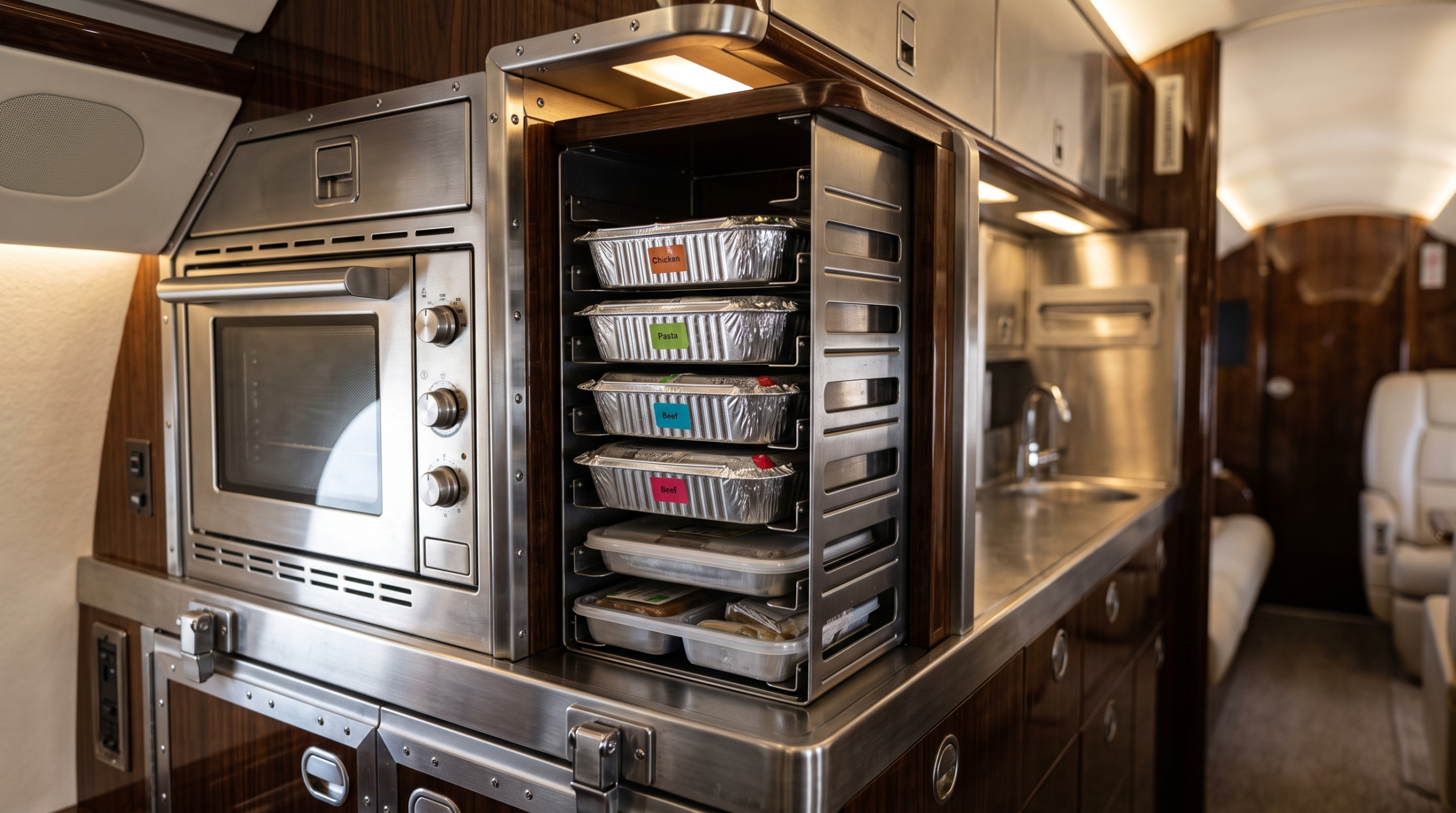
- Use oven- or microwave-safe pans. Pick pans with known heat tolerance and avoid stickers that could melt or contaminate. Clearly printed reheating guidance reduces errors.
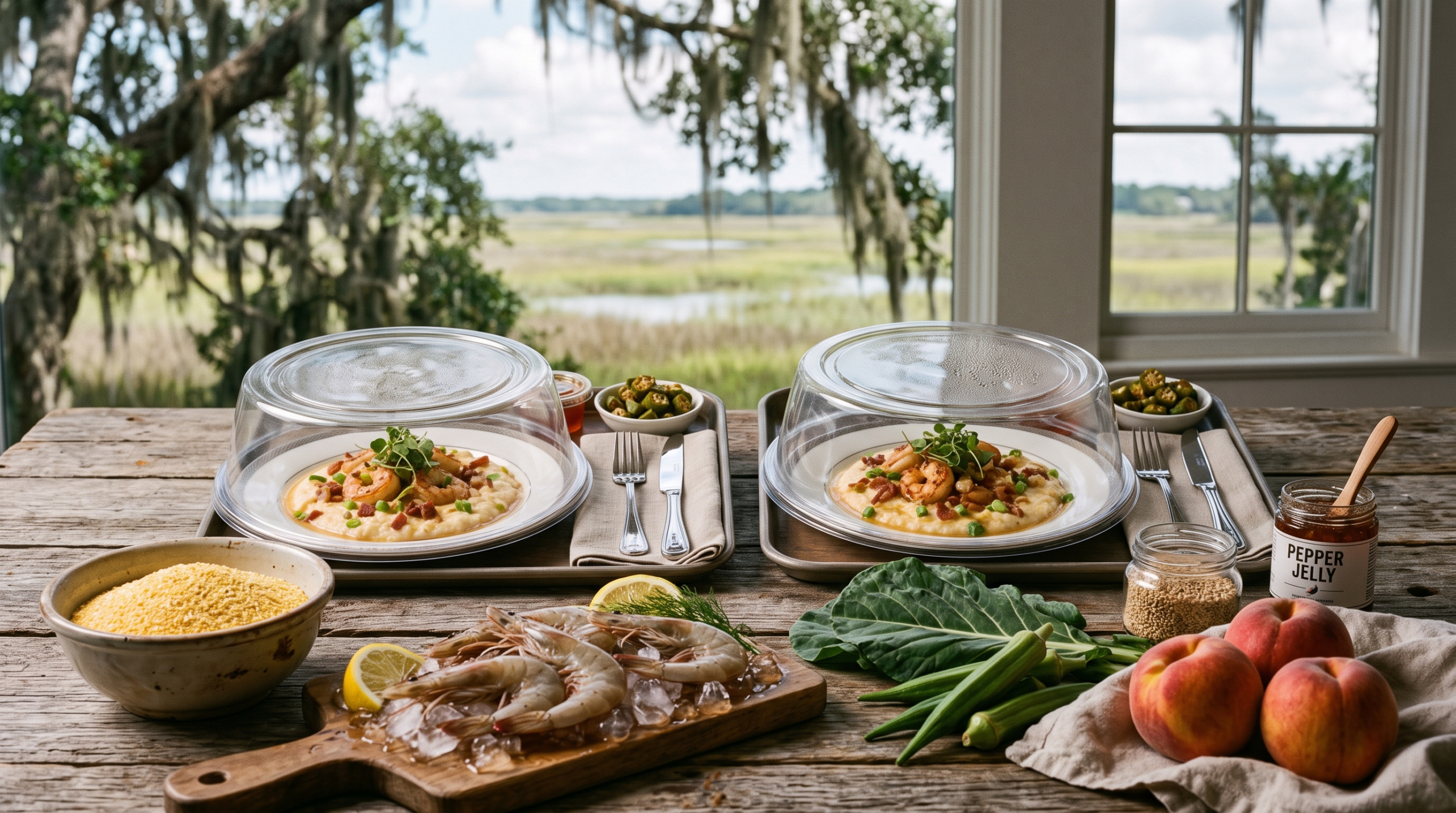
- Locking or screw-top lids for liquids. Choose solid seals instead of flimsy dome lids — they prevent leaks, limit cross-contamination and save space when stacked.
- Standardize sizes and stackability. Aircraft galleys differ wildly; flat, stackable trays that fit multiple oven types make loading and heating consistent.
2. Preserve moisture and texture
- Breads & baked goods: Low humidity dries them fast. Pack soft breads in moisture-preserving films and include a spread when appropriate to restore mouthfeel.
- Proteins: Choose braised or sous-vide proteins that retain juices. Combine this with vacuum sealing and correct reheating to avoid rubbery textures.
- Desserts: Protect cakes and whipped toppings with inserts or sealed compartments; delay exposure to air until service to avoid collapse and drying.
3. Keep sauces and volatile components separate
Pack dressings, sauces and finishing oils in separate sealed containers. This prevents sogginess, allows precise finishing after reheating and helps restore aroma lost to cabin conditions. Including spreads is an effective way to reintroduce taste and mouthfeel at altitude.
4. Labeling, reheating and food safety
- Clear reheating instructions: Temperature, time, whether to remove lids and any finishing steps must be on every reheatable item. This is a line-level quality control critical to consistent service.
- Allergen & lot labeling: Durable labels and tamper-evident seals support HACCP and quick traceability.
- Cold chain & high-risk foods: Monitor meats, poultry, seafood, eggs and dairy closely; document cold chain and avoid raw/undercooked items for crew service.
5. Design packaging for the galley — not just the kitchen
No two galleys are standard. Test pans for oven height/width fit, stackability in service carts and ease of opening/serving in tight spaces. Keep an inventory of alternate pan sizes for specific aircraft and simulate loading during prep.
6. Train and simulate
Packaging choices only work when the team understands why. Use hands-on training: reheating practice, blindfolded taste tests to simulate diminished smell at altitude, and simulated galley service to test opening, heating and plating. This turns packaging decisions into reliable outcomes.
7. Be sustainable — but test first
Biodegradable and compostable options are attractive but vary in seal strength and heat tolerance. Pilot and test any eco-materials for leak resistance and reheating performance before full adoption.
Packing-line checklist (use before dispatch)
- Entrées vacuum-sealed or in oven/microwave-safe trays.
- Reheating label on each hot container (temp/time/remove lid).
- Sauces/dressings sealed separately.
- Breads wrapped to preserve moisture; spreads included as needed.
- Locking or screw-top lids on liquids; avoid dome lids.
- Tamper-evident seal + lot/allergen label.
- Cold chain verified for high-risk foods; no raw crew meals.
- Fit & stackability check for intended aircraft.
Final thought
Packaging is part of the recipe. The smallest change — a vacuum seal, a stackable pan, a separate sauce cup — can transform how food tastes and performs at altitude. Invest in tested packaging, straightforward labels, and hands-on training and you’ll see measurable improvements in passenger satisfaction and fewer inflight service surprises.