DC Airport Catering Excellence and How to Find It
Why High-End FBO Food Trays Define the Private Jet Dining Experience
High-end FBO food trays are the backbone of luxury private jet dining — purpose-built to protect gourmet meals during ground transport, support safe reheating onboard, and deliver a five-star presentation the moment the cabin door closes.
Quick answer — what makes FBO food trays “high-end”?
| Feature | What It Means for Your Flight |
|---|---|
| Aviation-grade materials | Aluminum alloy or food-safe ABS plastic that handles oven and freezer temps |
| Compartmentalized design | Keeps food, sauces, and silverware separated and secure in transit |
| Cold-delivery ready | Meals travel chilled to preserve quality and food safety |
| Reheat-compatible | Oven-safe or microwave-safe packaging for easy galley use |
| Custom presentation | VIP plating, dietary accommodations, and branded service options |
Whether you’re David, coordinating a last-minute departure for your executive out of Charleston Executive Airport (JZI), or Maria, managing multi-leg catering for a charter fleet, the tray holding that meal matters far more than most people realize.
A poorly chosen tray can turn a perfectly cooked entrée into a soggy, spilled disappointment at 30,000 feet. A well-engineered one? It arrives looking exactly as the chef intended.
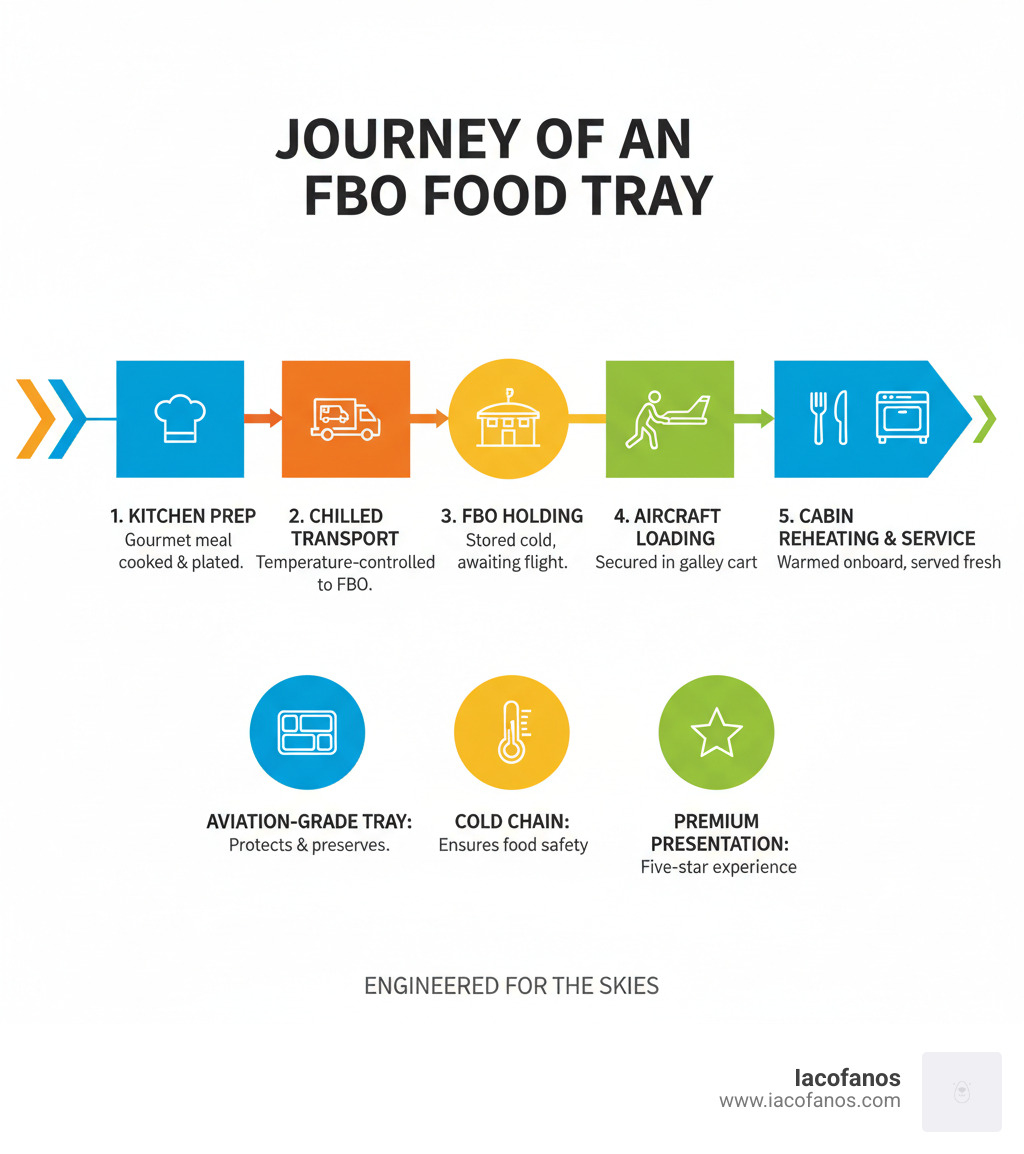
Private jet catering is fundamentally different from restaurant dining. Meals are prepared on the ground, transported to an FBO, held cold, and then reheated in a galley — sometimes hours later. That entire journey, from kitchen to cabin, depends on the right tray doing its job at every step.
At Iacofanos, we’ve spent over 20 years mastering this process for clients across Charleston SC, Columbia SC, Charlotte NC, and Cleveland OH. This guide breaks down exactly what separates a premium FBO tray from a standard one — and why it matters for your next flight.
The Engineering Behind High-End FBO Food Trays
When we talk about high-end FBO food trays, we aren’t just talking about a piece of plastic. We are talking about highly engineered equipment designed to survive the “G-forces” of a delivery van and the pressurized environment of a Gulfstream G650. In private aviation, the tray is the stage upon which the culinary performance happens.

Aviation-grade materials are the standard for premium service. These trays must be rigid enough to prevent flexing—which leads to spilled sauces—yet light enough to satisfy the weight restrictions of smaller aircraft. For example, a SOHO Brooklyn Large Rectangular Tray or similar sand-cast aluminum alloy pieces provide a sophisticated, dimpled surface that looks spectacular while remaining FDA-safe and durable.
Material Innovations in High-End FBO Food Trays
The choice of material often dictates the flight crew’s entire workflow. We generally see three main categories of materials used in the industry:
| Material Type | Pros | Best Use Case |
|---|---|---|
| Aluminum Alloy | Oven-safe, freezer-friendly, looks like permanent chinaware. | VIP hot entrées and high-end presentation. |
| ABS Plastic | Lightweight, dishwasher-safe, extremely durable. | Crew meals and high-volume corporate charters. |
| Recyclable Foil | Cost-effective, disposable, handles high heat. | Large groups or quick-turn flights where storage is tight. |
Innovations like the Catering Tray Pro™ have changed the game for ground handling. Weighing only 4.1 pounds (1.87kg), these trays are significantly lighter than traditional oval trays, reducing the physical strain on catering coordinators and flight attendants during the loading process.
Ergonomic Features of High-End FBO Food Trays
Efficiency in a cramped galley is non-negotiable. High-end trays incorporate self-balancing designs and underside handholds to ensure that a flight attendant can navigate a narrow aisle without a “tilting” disaster.
Compartmentalized layouts are another essential feature. By using specific sections for proteins, starches, and garnishes, we ensure that flavors don’t migrate during the climb to cruise altitude. Furthermore, specialized cylindrical compartments help secure silverware, preventing the “clinking” noise and potential loss of expensive sets during the cleanup of soiled plates.
Temperature Control and Safety Standards for Inflight Dining
Food safety is the invisible passenger on every flight. Because we operate in a “cold chain” environment, high-end FBO food trays must be able to transition from a refrigerated delivery vehicle to the aircraft galley without compromising the integrity of the meal.
Following strict guidelines ensures safety during transport by preventing bacterial growth. This is why you will rarely see a professional caterer deliver a steaming hot plate of pasta to a pilot 90 minutes before takeoff.
Why Meals are Delivered Cold to FBOs
It might seem counterintuitive to receive a cold meal when you’re paying for a five-star experience, but it is the gold standard for quality. Delivering meals cold:
- Prevents Overcooking: If we delivered a hot steak, it would continue to cook in the tray, arriving at the aircraft well-done and rubbery.
- Maximizes Safety: Keeping food below 40°F (4°C) during the handoff at the FBO ensures that no harmful bacteria can develop.
- Preserves Texture: Cold delivery allows the flight crew to perform a “single-reheat” just before service, maintaining the moisture and snap of the food.
Reheating Capabilities by Aircraft Size
The tray we select often depends on the “kitchen” available on the plane.
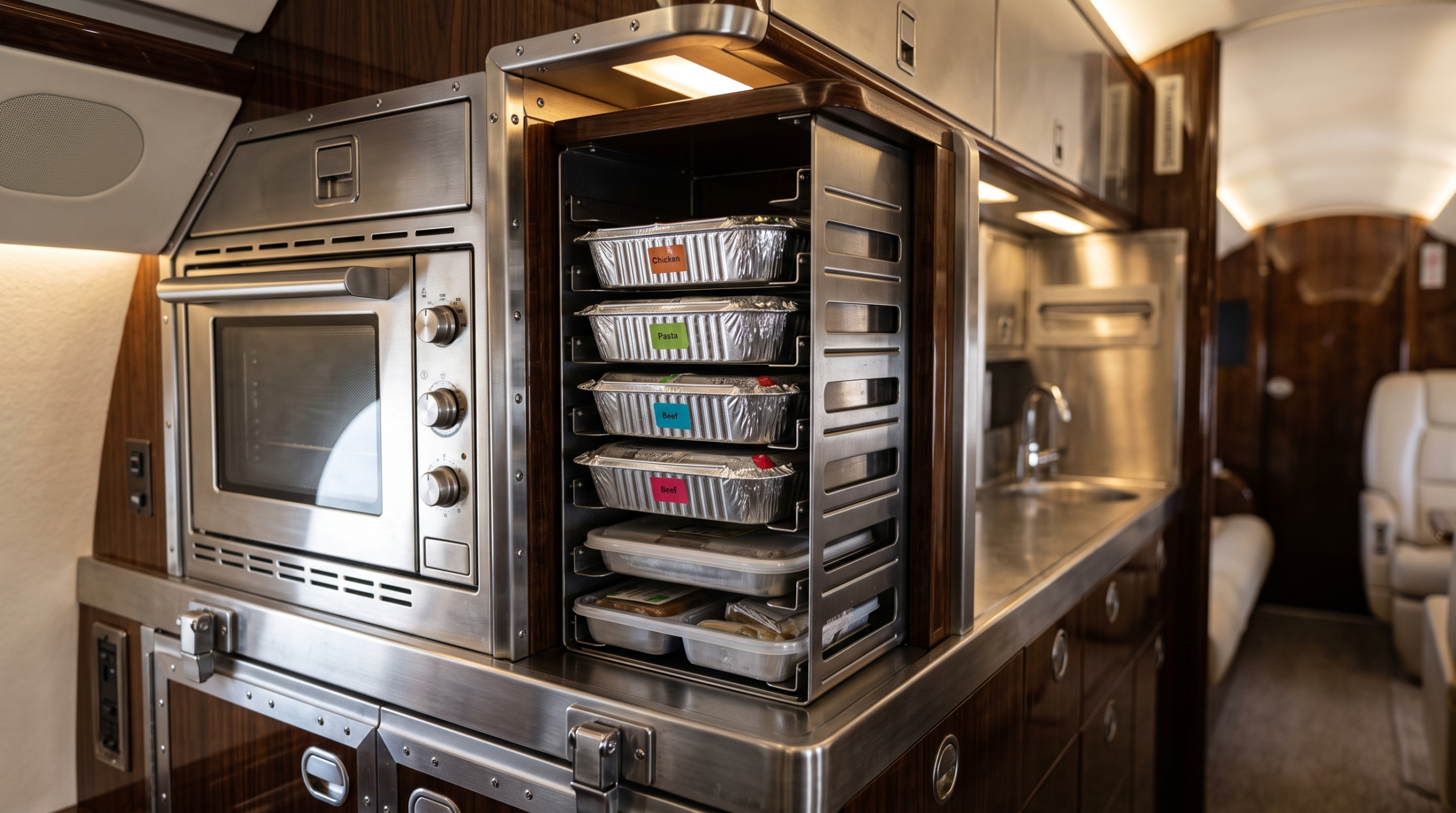
- Heavy Jets (Global, Gulfstream): These usually feature full convection ovens. We use aluminum alloy trays or oven-ready tins that can withstand 350°F+ temperatures.
- Midsize Jets: These often rely on microwave ovens or warming drawers. Here, we might opt for high-grade ABS plastic or microwave-safe composites.
- Light Jets: Many light jets have no heating equipment. In these cases, we coordinate with the FBO to “pre-heat” the meals in the FBO kitchen just before the passengers board.
Optimizing Menus for Private Jet Catering in Charleston SC and Charlotte NC
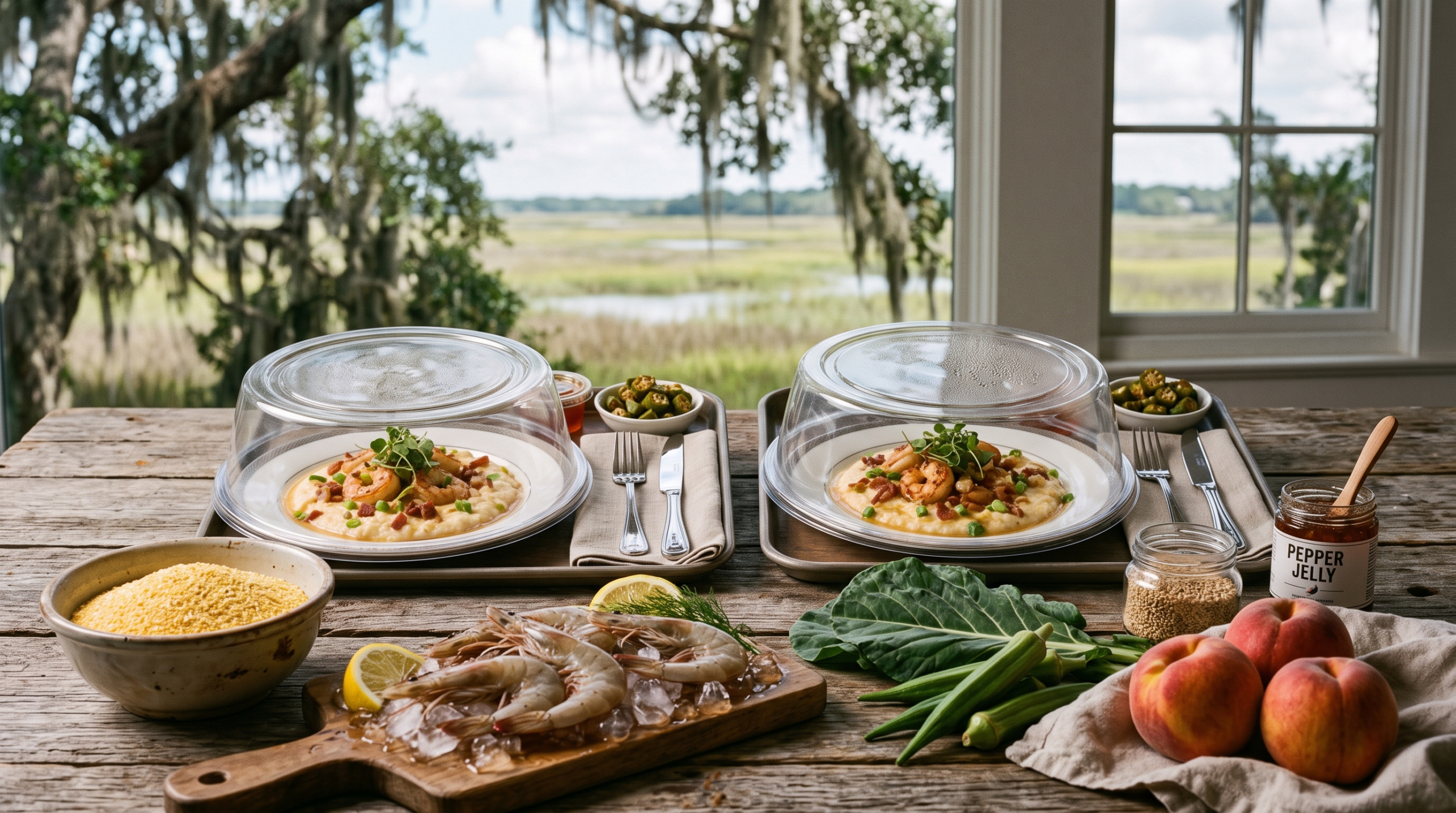
In cities like Charleston, SC, and Charlotte, NC, our clients often request local flavors—Lowcountry shrimp or Carolina BBQ—but not every dish translates well to the sky. The high-end FBO food trays we use are specifically packed to handle the effects of altitude on taste buds and food structure.
Foods That Travel Best in High-End FBO Food Trays
Cold items are the safest and often most delicious bet for private aviation.
- Charcuterie & Cheese: These are stable, visually stunning, and require zero reheating.
- Grain Salads: Unlike delicate greens, quinoa or farro salads don’t wilt and actually taste better as the flavors marinate during transport.
- Bento Boxes: These are perfect for “high-end FBO food trays” because they keep every component isolated and fresh.
- Artisan Sandwiches: When wrapped correctly and placed in a sturdy tray, these maintain their structure perfectly.
Culinary Items to Avoid at Altitude
We generally advise our clients in Columbia, SC, and Cleveland, OH, to avoid certain items that simply don’t survive the journey. Fried foods become soggy almost instantly due to steam trapped in the packaging. Delicate seafood like scallops can become rubbery during a reheat, and soft-serve ice cream is a logistical nightmare unless the aircraft has a dedicated deep-freeze (which most do not).
Logistics and Timing for FBO Deliveries in Cleveland OH and Columbia SC
The most expensive meal in the world is worthless if it arrives five minutes after the wheels leave the tarmac. Precision timing is what we do best at Iacofanos.
Standard Delivery Timelines
We operate on a “90-minute rule.” We aim to have our high-end FBO food trays delivered to the FBO exactly 90 minutes before departure. This provides a 30-minute buffer for the pilots to perform their pre-flight checks and another 60 minutes for the crew to organize the galley before passengers arrive.
While we recommend a 24-48 hour notice for complex orders, our 10+ years of experience has taught us that aviation is unpredictable. We offer 24/7 availability and can often handle last-minute “pop-up” flights with a response time of under 15 minutes.
Customization for VIP and Crew Needs
Every passenger is unique. We regularly customize trays for:
- Dietary Restrictions: We provide dedicated vegan, gluten-free, Halal, and Kosher-style options, ensuring no cross-contamination occurs in our kitchens.
- Crew Meals: Pilots need durable, high-energy meals that can be eaten quickly. We use rugged, stackable packaging for crew trays to save space in the cockpit.
- Concierge Services: Need a specific bottle of wine from a boutique shop in Sam Rittenberg Blvd – Charleston? Or perhaps a specific newspaper for a flight out of Charlotte? We handle those “off-menu” requests to ensure the tray is just one part of a complete VIP experience.
The Economics of Luxury Aviation Catering Services
Why does a sandwich tray for a private jet cost more than one for a corporate office? The answer lies in the hidden logistics of the tarmac.
Factors Driving Catering Costs
- FBO Handling Charges: Most FBOs charge a “ramp fee” or a catering handling fee to receive and store the food in their refrigerators.
- Airport Fees: Security protocols at major hubs like Cleveland (CLE) or Charlotte (CLT) require specialized delivery permits and background-checked drivers.
- Specialized Packaging: Using high-end FBO food trays that are oven-safe and leak-proof is significantly more expensive than standard “party store” platters.
- Labor-Intensive Plating: Every tray is hand-plated by chefs who understand that “we eat with our eyes first,” especially at 40,000 feet.
Frequently Asked Questions about FBO Catering
How far in advance should I order private jet catering?
Ideally, you should place your order 24 to 48 hours in advance. This allows us to source the freshest local ingredients in markets like Charleston or Cleveland. However, we understand the nature of private travel and can often accommodate last-minute requests within a few hours.
Can FBO trays accommodate specific dietary restrictions like Halal or Kosher?
Absolutely. We are experts in accommodating dietary needs. Whether you need a vegan spread for a flight out of Columbia, SC, or a gluten-free menu for a group in Charlotte, NC, our chefs use dedicated preparation areas to ensure safety and compliance with all dietary requirements.
What is the difference between passenger and crew meal packaging?
Passenger meals are focused on “the reveal”—beautifully plated on high-end FBO food trays that look like restaurant service. Crew meals are focused on “the utility”—durable, compact, and easy to eat in a cockpit environment without creating a mess. Both receive the same high-quality ingredients, but the presentation is tailored to the user’s environment.
Conclusion
Elevating the inflight experience starts long before the plane takes off. It begins in a kitchen where culinary expertise meets aviation precision. At Iacofanos, we take pride in being more than just a caterer; we are a logistics partner for flight departments across the Southeast and Midwest.
With over 20 years of experience and a 98% excellence rating from our clients, we understand that every detail—down to the material of your high-end FBO food trays—matters. Whether you are flying out of Charleston SC, Columbia SC, Charlotte NC, or Cleveland OH, we are ready to serve you.
Elevate your next flight with premium inflight catering and experience the difference that professional FBO catering can make. From the first inquiry to the final bite at altitude, we ensure your journey is nothing short of delicious.