Hurricane Season Flight Catering: How Charleston Flight Departments Plan Meals Around Weather Diversions
Hurricane season runs from June 1 through November 30 in the Atlantic basin, and the statistical peak falls in the first half of September — precisely when Charleston’s business aviation traffic is climbing back toward its autumn high. For flight departments operating in and out of the Lowcountry, that overlap creates a specific planning problem that most catering conversations never touch: what happens to your catering when the flight itself moves?
This is not a question about whether food survives turbulence. It is a logistics question. A weather system that reroutes a trip does not just delay a meal — it can strand a delivery at an FBO the aircraft will never reach, or leave a crew on a diverted overnight with nothing arranged. Departments that plan for it lose very little. Departments that do not tend to lose the whole order.
The three ways weather breaks a catering plan
The departure slips. The most common and least damaging case. A trip pushes from 8:00 AM to 2:00 PM, and catering that was built for a morning delivery now has to hold six extra hours or be remade. Whether it holds depends entirely on what was ordered — which is a menu decision made days earlier.
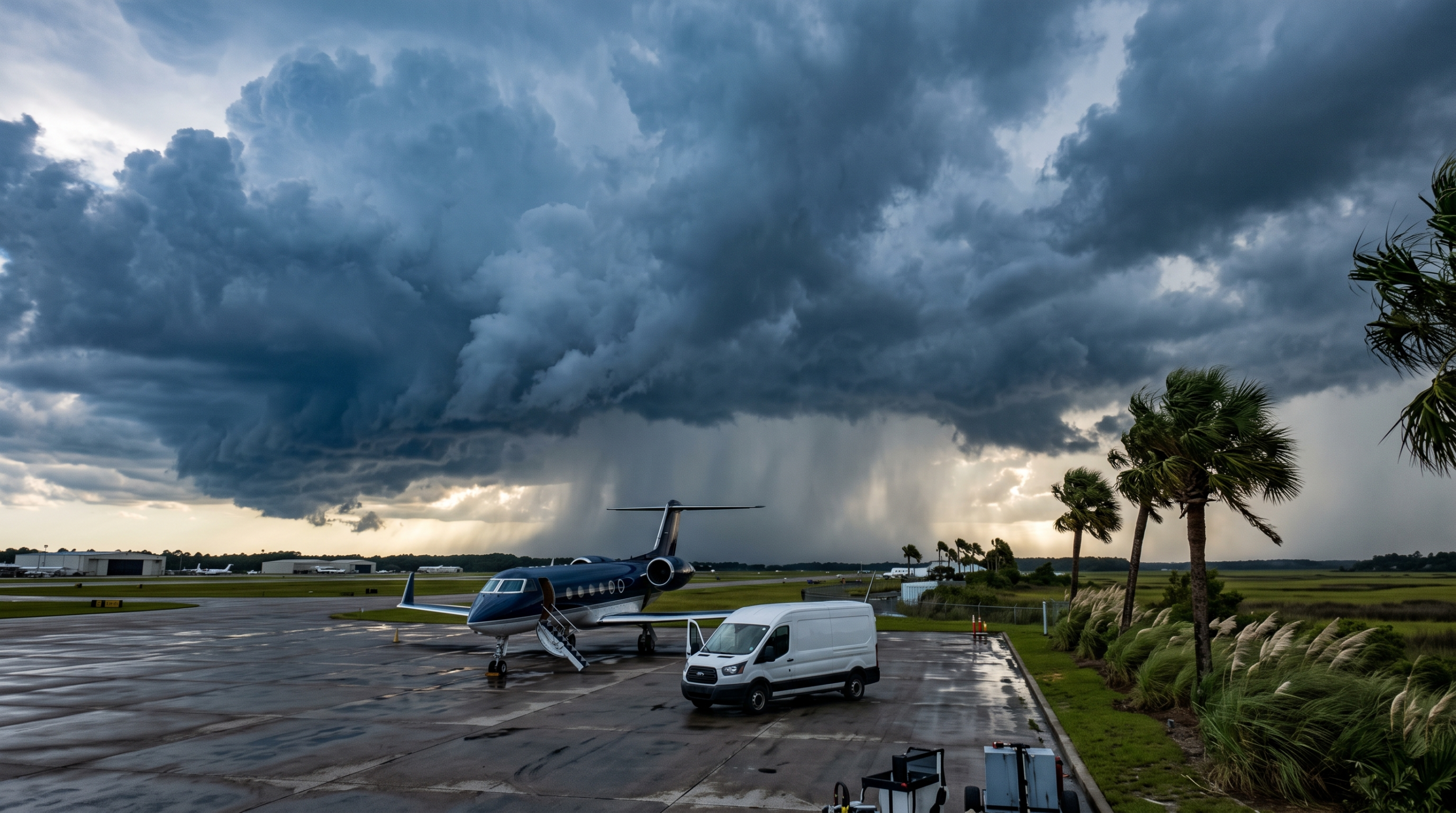
The departure field changes. A system moving onto the coast can push an aircraft to reposition before the weather arrives. Catering ordered to a Charleston FBO is now at the wrong airport, with the aircraft two hundred miles away.
The trip cancels or the destination changes mid-trip. The return leg’s catering, ordered days ago into a destination the aircraft is no longer visiting, needs to be cancelled or redirected — and somebody has to remember it exists.
Each of these is manageable. None of them manages itself.
Order for hold time during storm season
The single most useful adjustment a scheduler can make between August and October is to bias the menu toward hold tolerance.
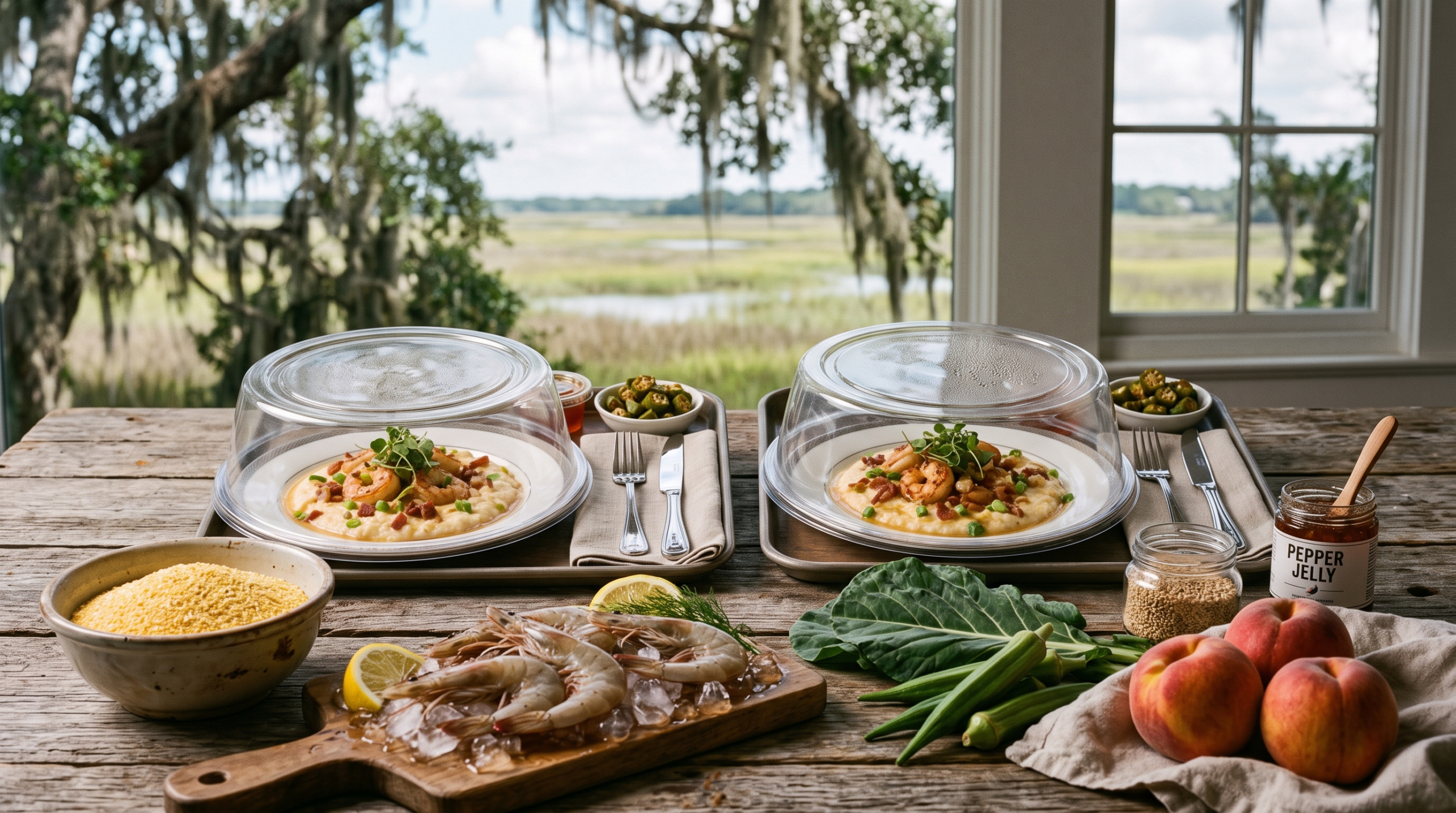
Some formats absorb a six-hour delay without meaningful degradation: charcuterie and cheese boards, crudité platters, composed cold salads with dressing packed separately, sealed grain bowls, whole fruit, and hard cheeses. These are genuinely premium formats — biasing toward them is not a downgrade.
Other formats do not tolerate delay. Delicate plated fish, dressed greens, anything fried, soft-set eggs, and hot items intended for immediate reheat all have short useful windows. Ordering these on a day with a named storm in the basin is a bet.
A practical rule used by several departments we work with: during peak season, if the National Hurricane Center has an active system within forecast range of the route, the trip gets the hold-tolerant menu regardless of service tier. The passenger experience barely changes. The failure mode disappears. Our piece on packaging for in-flight catering covers which packaging formats extend hold time meaningfully.
Build a diversion protocol into the order
Most catering orders contain no instruction for what happens if the flight moves. Adding two lines fixes that.
A named decision point. Agree with your provider on a time — typically four to six hours before the delivery window — at which the order is either confirmed or held. Before that point, changes are cheap. After it, the food is made.
A single reachable contact on the day. Not an office line. A mobile number for whoever is actually watching the trip. During weather, the difference between a redirected delivery and a lost one is usually one phone call that connected.
A stated fallback. If the trip diverts, does the catering follow to the new field, get held for a later departure, or get cancelled? Deciding this in advance takes thirty seconds. Deciding it at 5:00 AM during a ground stop does not.
Because catering is reconciled against the aircraft, keeping the tail number as the reference on every message means a redirect is a routing change rather than a new order.
Crew catering during irregular operations
Weather disruption is exactly when crew catering matters most and is most often forgotten. A crew that expected an eight-hour duty day and is now sitting through a four-hour ground stop, or repositioning to an unplanned overnight, needs food — and the FBO they are sitting in may have very little.
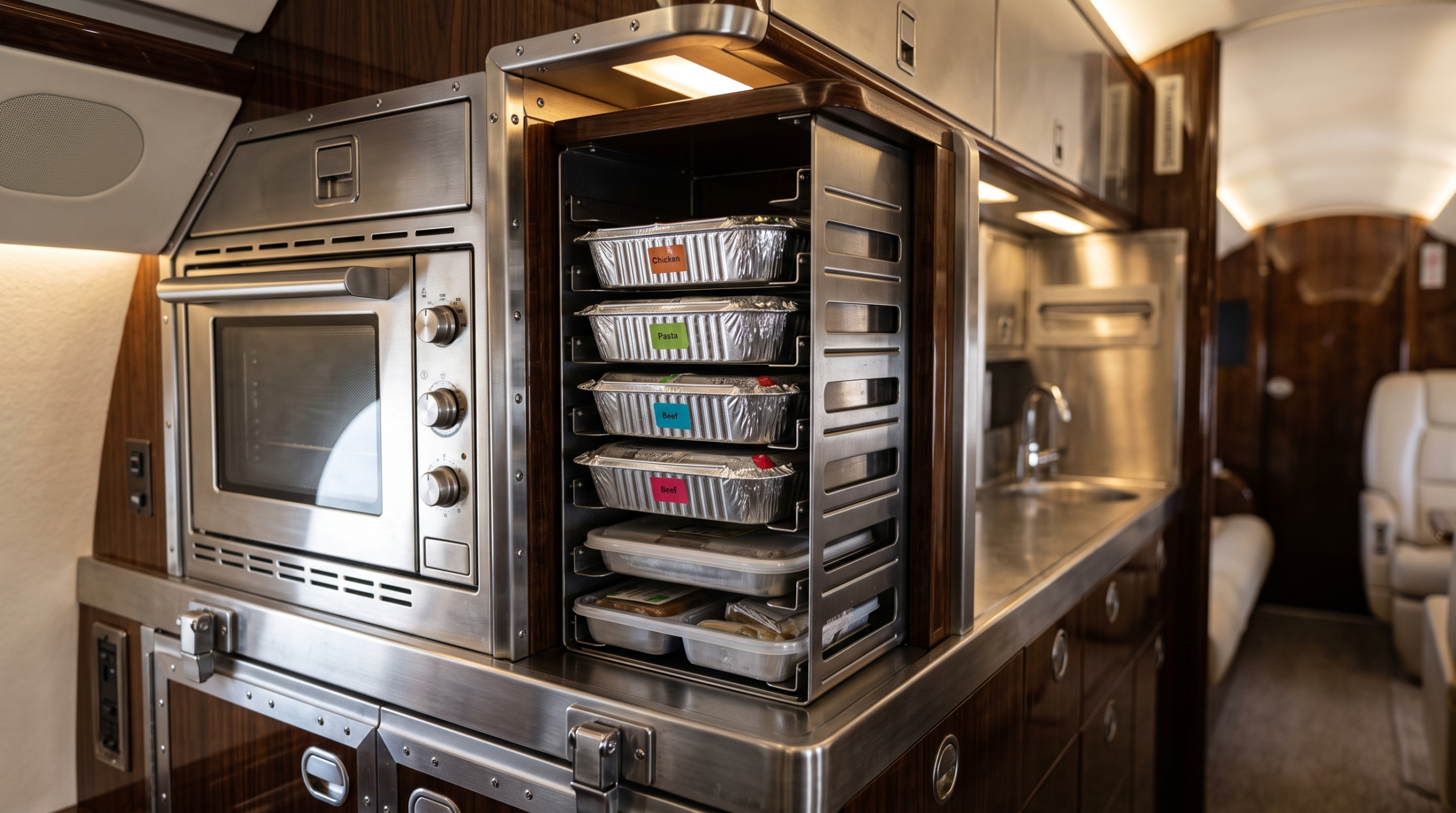
Departments that operate heavily in hurricane season increasingly carry a standing contingency provision: a shelf-stable crew provision kit aboard the aircraft, refreshed monthly, covering two crew for one unplanned meal. It is inexpensive, it lives in a galley cupboard, and it removes the worst version of this problem entirely. Our guide to private jet crew meals covers what belongs in one.
Charleston-specific factors
The Lowcountry adds variables beyond the storm itself. Tidal flooding on king tides can slow or close delivery routes independent of any weather system, and it is on a published calendar. Pre-storm periods produce a surge in departures as owners and operators move aircraft out ahead of a system — which compresses kitchen and delivery capacity across the entire market at once. And post-storm, road conditions and power availability can affect kitchens for days after the airfield itself reopens.
None of this makes Charleston a difficult market to cater into. It makes it a market where a local kitchen with local knowledge is worth more than it looks on paper. Our Charleston KCHS catering guide covers the field-level detail.
What to ask your provider before the season
Do you have a defined cut-off after which an order cannot be changed? Can catering be redirected to a different field mid-trip, and what does that cost? What is your cancellation policy on weather? Which of your menu items are built for extended hold? Do you maintain a shelf-stable crew provision option? And who answers the phone at 4:00 AM during irregular operations?
Plan your storm-season catering
If your department flies the Southeast between June and November, it is worth having this conversation once, before the season rather than during it.
Talk to an Inflight Specialist — we will set up a hold-tolerant seasonal menu, a diversion protocol on your operator profile, and a crew contingency provision for your fleet.
More on Charleston operations on our Charleston catering page and in our inflight catering services overview. Current tropical forecasts and advisories are published by the NOAA National Hurricane Center, and operator guidance for irregular operations is available from NBAA.