How Far in Advance Should You Order Private Jet Catering? A Scheduler’s Timing Guide
Private jet catering lead time is the question every new scheduler asks and every experienced one has learned the hard way. The honest answer is that there is no single number — the right lead time depends on what you are ordering, where it is going, and what time of year it is. A crew sandwich tray into a major metro FBO on a Tuesday in February is a different problem from a twelve-passenger plated dinner with three dietary restrictions into a secondary field during peak season.
This guide gives you working lead times by order type, explains what actually changes when you compress them, and covers how to structure your ordering so that the short-notice trips are the exception rather than the norm.
Working lead times by order type
Standard passenger catering, familiar route: 24 to 48 hours. This is the comfortable window. The kitchen can source properly, the order can be reviewed, and there is margin to absorb a schedule change without re-doing the work.
Crew meals only: 12 to 24 hours. Crew catering is simpler and more standardized, particularly if you have a standing crew profile on file. With a profile, this can compress further.
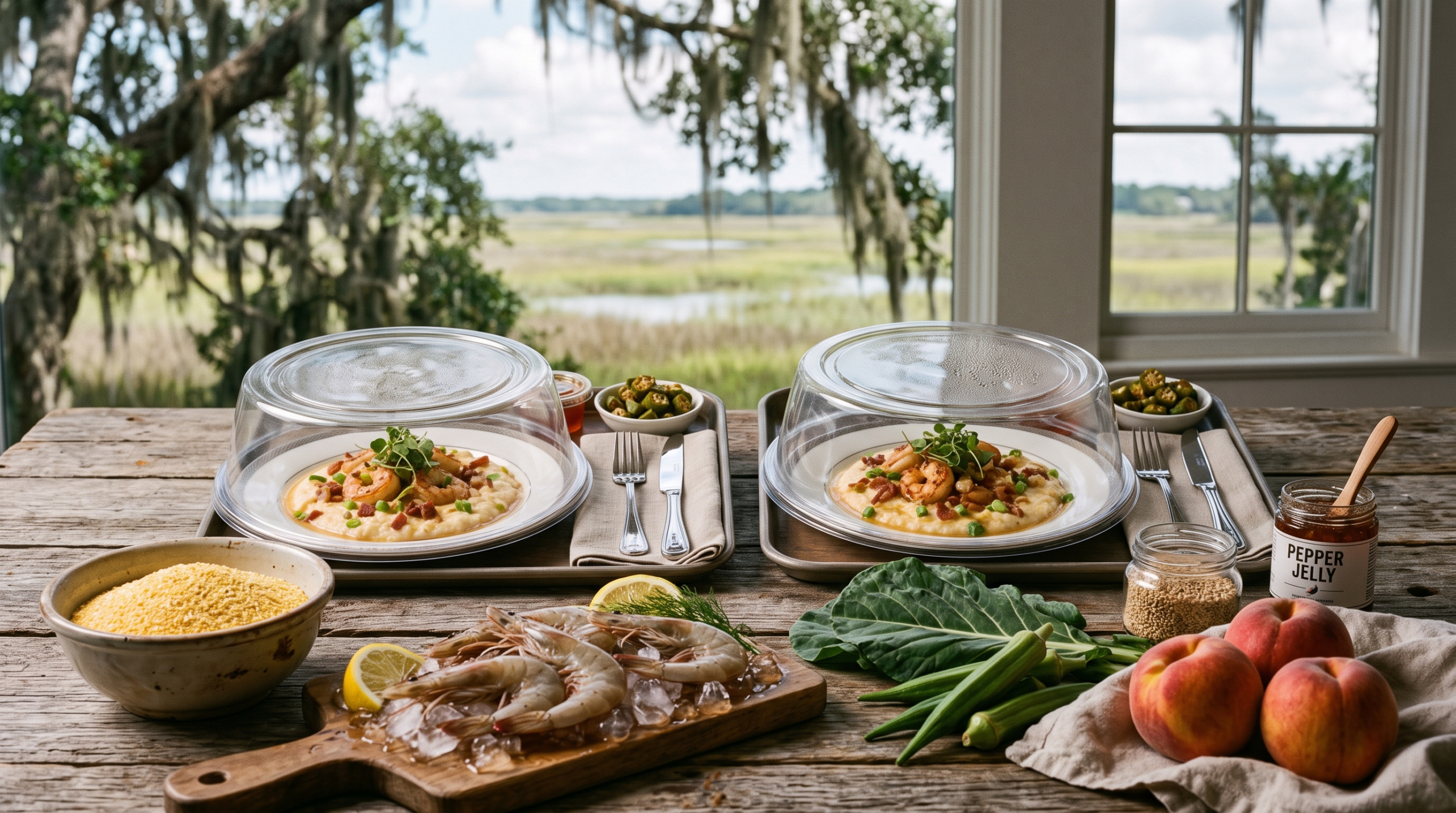
Plated fine-dining service: 48 to 72 hours. Composed multi-course service requires specific sourcing, and the ingredients are frequently not held in standing inventory. This is the tier where compressed lead time genuinely costs you options.
Specialty dietary — kosher, halal, severe allergen protocols: 72 hours minimum. Certified kosher and halal sourcing depends on supply chains that do not turn on demand, and rigorous allergen protocols require dedicated prep scheduling. Our guide to dietary restrictions on private jets covers what is executable in each window.
Peak-season or event-week departures: add 24 to 48 hours to everything above. When a market’s kitchen capacity is saturated, your lead time is competing with everyone else’s.
Secondary or remote fields: add 12 to 24 hours. Longer drive times and thinner local kitchen coverage both eat margin.
Multi-leg trips with catering on each leg: order the whole trip at once, 72 hours out. Sequencing kitchens across a multi-city itinerary is a coordination problem, not a cooking problem, and it wants the whole picture up front.
What actually changes when you compress lead time
Short notice does not simply mean the food arrives in a hurry. Specific things degrade in a predictable order:
First, menu breadth narrows. Inside 12 hours you are ordering from what the kitchen can execute with product on hand. That is often very good food, but it is not an open menu.
Second, specialty sourcing drops out. Certified kosher, specific allergen-free suppliers, and hard-to-source proteins are the first things that become unavailable.
Third, format shifts from composed to assembled. Plated multi-course service gives way to high-quality trays, boards, and pre-portioned formats.
Fourth, cost rises. Expedited sourcing, off-schedule prep labor, and dedicated delivery all carry real cost. Our private jet catering cost guide breaks down how urgency shows up on an invoice.
Last, and only in genuinely extreme windows, quality risk appears. A good provider will decline an order they cannot execute well rather than deliver something poor. If a provider says yes to everything regardless of timing, that is information about them.
The lead-time clock does not start when you think it does
A common scheduling error is measuring lead time to wheels-up. The kitchen’s clock runs to the delivery window, which is typically ninety minutes to two hours before departure. On top of that, most kitchens have an order cut-off time — an order placed at 8 PM for a 7 AM departure the next morning may be a two-hour effective lead time from the kitchen’s perspective, not eleven.
Early-morning departures are where this bites hardest. A 6:00 AM wheels-up needs delivery around 4:00 AM, which means prep overnight. That is executable, but it has to be ordered the previous afternoon, not the previous evening.
How to make short-notice orders work when you need them
Every flight department has trips that materialize with no notice. The goal is not to eliminate them but to make them cheap and low-risk. Three things do most of the work:
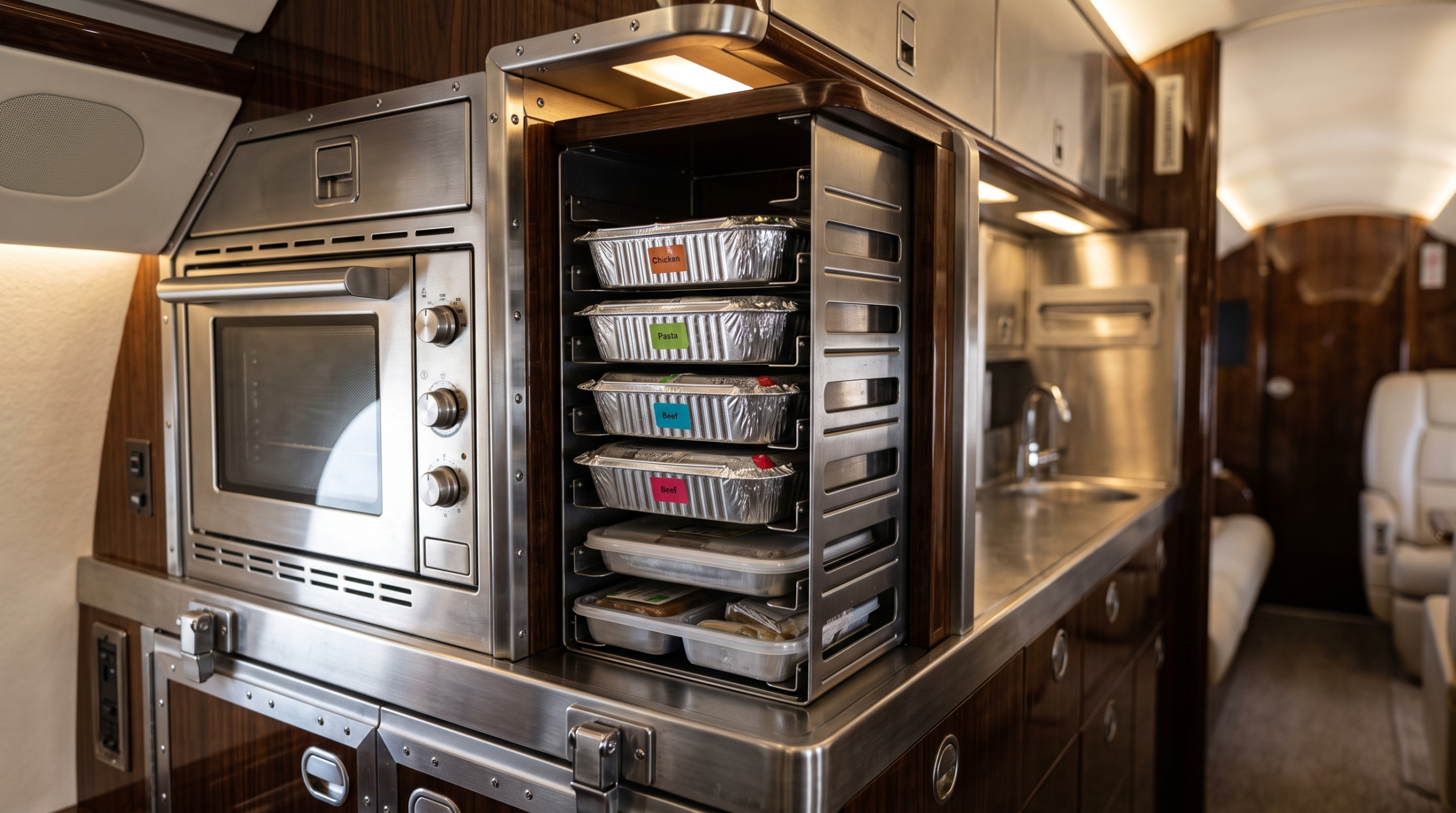
Have an operator profile on file before you need it. Fleet, galley specs, usual FBOs, billing, standing preferences, and known dietary requirements. A short-notice order against a complete profile is a two-line request. Against a cold start, it is a twenty-minute intake call you do not have time for.
Pre-approve a short-notice menu. Agree in advance on a small set of items your department is happy with that the kitchen can always execute. When the 4-hour request lands, nobody has to make a menu decision under pressure.
Order provisionally on soft trips. If a trip is 70% likely, place the order with a stated cancellation window rather than waiting for certainty. Most providers would rather hold a slot than take a cold call. Our piece on short-notice private jet catering covers the operational side in detail.
When to update rather than re-order
Trips change. Departure times slip, passenger counts move, FBOs get swapped. What matters is telling your provider early, in the same channel as the original order, referenced to the tail number. A departure time moving two hours later is usually absorbable with a phone call. The same change communicated forty minutes before the original delivery window is a problem for everyone.
As a working rule: passenger count changes and timing slips inside four hours are almost always manageable. Menu changes and new dietary requirements inside four hours frequently are not.
Build your ordering rhythm
The departments that never have catering problems are not the ones with the longest lead times. They are the ones with a profile on file, a pre-approved fallback menu, and the habit of sending the order the moment the trip is confirmed rather than the day before it flies.
Set Up Your Operator Profile — we will capture your fleet, FBOs, crew preferences and standing requirements so your next order, however late it lands, routes itself.
More on ordering and operations in our catering FAQ, our inflight catering services overview, and our buyer’s guide to catering for private flights. Broader charter operations best practice is published by the National Air Transportation Association (NATA).