Short-Notice Private Jet Catering: How to Coordinate Premium Inflight Meals on Tight Turnarounds
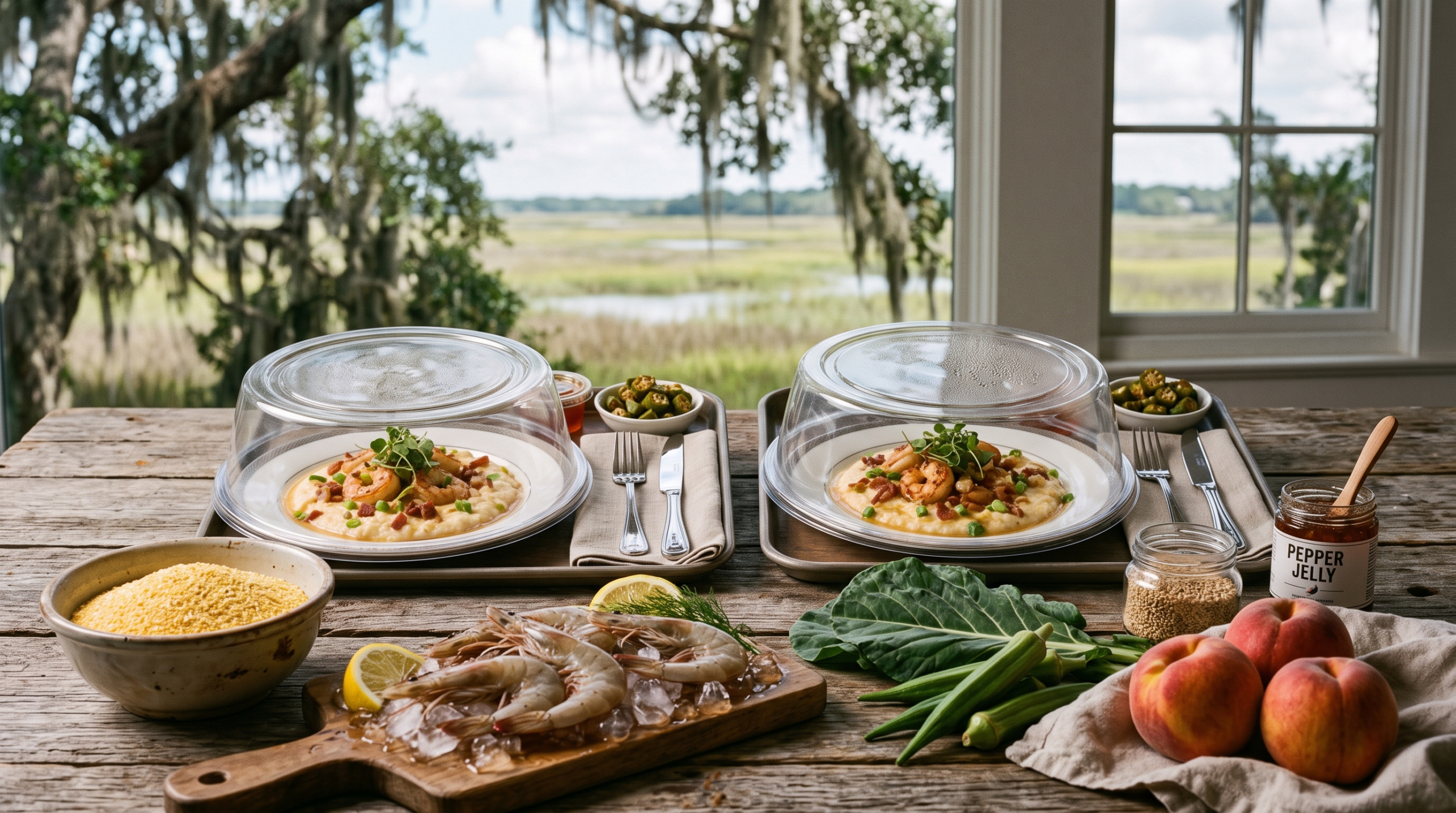
Short-notice private jet catering — orders inside 8 hours of departure, sometimes inside 2 — is one of the most operationally demanding parts of inflight service. The order comes in at 6:14 a.m. for a 9:30 a.m. departure out of Charleston Executive (KCHS). Six passengers, two crew, one kosher meal, three hot lunches, a vegan plate, and a celiac-friendly snack tray. The galley fits a half-size trolley and a single insulated bag. The pickup runs 70 minutes before wheels-up. The kitchen has to source, prep, plate, package, and deliver in three hours.
This is the day-to-day reality for charter dispatchers, FBO coordinators, and corporate flight departments. This guide walks through how short-notice inflight catering actually works, what to ask for when you call, and what makes the difference between “we can’t” and “we’ll have it at the FBO with 30 minutes to spare.”
What “short notice” actually means in private aviation catering
Lead times vary across the industry, but most premium inflight catering providers categorize orders into three bands:
Standard lead time: 24–48 hours. The kitchen sources fresh, plates without compromise, and confirms dietary requirements with margin. This is the band most premium quality is built around.
Short notice: 4–8 hours. The kitchen pulls existing chef time forward, sources from on-hand or partner inventory, and packages for delivery on a compressed timeline. Some quality compromises are possible (less custom plating, more reliance on prepped components) but a well-coordinated provider can still deliver tier 2 or tier 3 service.
Last-minute: under 4 hours. The kitchen is in pure execution mode. The menu narrows to what can be reliably produced inside the window. Hot meals are sometimes off the table depending on protein and prep; cold components, charcuterie, and elevated snack trays often perform better than ambitious hot dishes.
Pricing reflects the band — expect a 20–50% short-notice premium inside 8 hours, sometimes higher inside 4. See our piece on how much private jet catering costs for the full pricing model.
The operational mechanics behind a fast turnaround
1. The first 10 minutes after the order lands
The dispatcher or operations contact gets the order: tail number, FBO, passengers, crew, dietary requirements, departure time, requested service tier. The kitchen pings the chef on shift and confirms what’s executable inside the window. If something on the request is unrealistic — a 90-minute window with a kosher specialty meal, for instance — the operator should push back immediately and offer an executable alternative, not silently accept and fail at delivery.
2. Sourcing and prep
Short-notice menus lean on what’s already in inventory or available from same-day partner sourcing. Fresh produce, hard-to-source proteins (Wagyu, fresh sushi-grade fish), and specialty allergen-free items get harder as the window tightens. A practiced kitchen plans daily inventory to handle a known volume of short-notice orders without compromising standard-lead orders.
3. Packaging for altitude on a clock
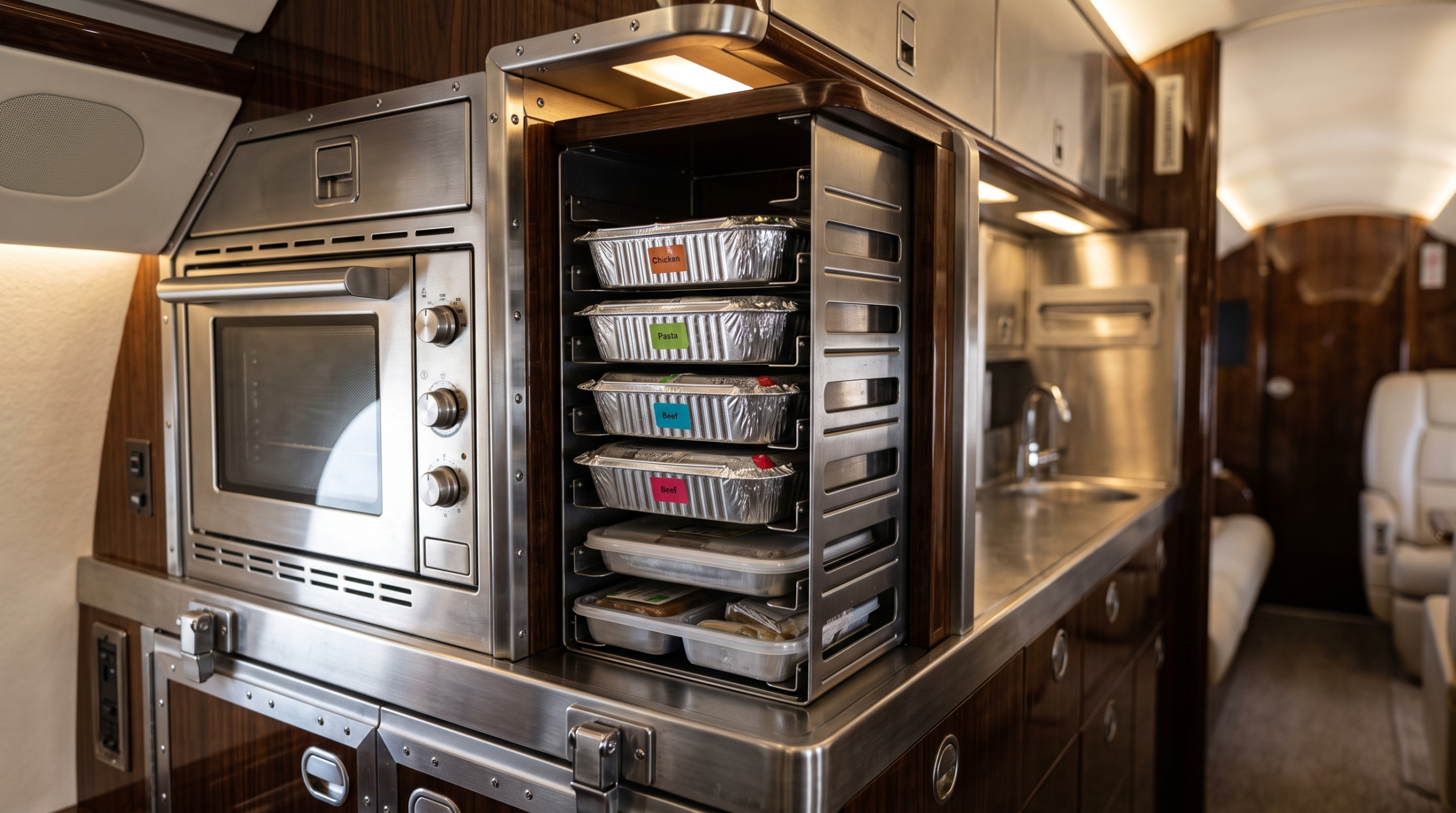
Packaging is where short-notice runs fail most often. Containers have to fit the specific aircraft’s galley, hold temperature for the actual gate-to-wheels-up window, and prevent dish movement during taxi. There’s no time to redesign packaging for an unusual galley — the kitchen needs the aircraft type up front to pull the right materials.
4. Delivery and FBO handoff
The delivery driver gets the FBO address, the contact name, the tail number, and the gate access details. They arrive 30–60 minutes before scheduled departure with a labeled set of trays and a delivery confirmation. The flight attendant or crew member receives, signs, and stages the meal in the galley.
What to provide when you make a short-notice request
The faster you provide these six pieces of information, the faster the operator can confirm or counter-offer:
- Tail number (or aircraft type if tail is not yet assigned)
- FBO and airport identifier (e.g. Atlantic Aviation at KCHS)
- Departure date and time in local time
- Passenger and crew count
- Dietary requirements and preferences per passenger if known
- Service tier preference — light catering, standard hot meal, premium VIP, or “whatever you can execute”
Tail number and FBO are non-negotiable. Without them the kitchen can’t route delivery and can’t size packaging.
What a good short-notice operator says yes to
Not every request fits inside an 8-hour window. A good operator is honest about what’s achievable and creative about what’s available.
Yes, inside 6–8 hours, domestic departures, standard or premium service: hot composed meals with prepped proteins, charcuterie and cheese boards, fresh salads, breakfast trays, snack and hydration setups.
Yes, but with menu trade-offs, inside 4 hours: high-end snack trays, charcuterie boards, sandwich service, breakfast (continental). Hot meal options narrow but aren’t always off the table.
Sometimes no: certified-kosher or certified-halal meals inside 4 hours if the certifying kitchen isn’t already prepared; sushi-grade sourcing inside 2 hours; rare-protein menus that depend on specific suppliers.
How nationwide coordination changes short-notice reliability
Charter operators flying coast-to-coast often run into a familiar problem: their primary catering provider is in one city, but the short-notice request is for a tail number two time zones away. A nationwide coordinator with vetted partner kitchens shifts the problem — instead of “we can’t, we’re not in that market,” the answer is “yes, our partner kitchen 14 minutes from the FBO can execute, here’s the menu.”
Iacofano’s coordinates inflight catering nationwide from our Charleston, SC operations base. Tail-number coordination, FBO handoff, and consistent packaging carry across the network, so a short-notice order for a tail in Cleveland or Atlanta or Centennial gets the same operational treatment as one for a tail at Charleston Executive.
Frequently asked questions about short-notice inflight catering
What’s the shortest notice you’ll accept for inflight catering?
We’ve executed orders inside 90 minutes when the route, FBO, and menu align with our standing capacity. The realistic floor for a quality outcome is 2–3 hours; under that, expect menu compromises and a coordination fee that reflects the operational complexity.
How much extra does short-notice catering cost?
Expect a 20–50% short-notice premium inside 8 hours, with the higher end of the range applying to truly tight windows and complex dietary mixes. Some operators won’t accept very-short-notice orders at any price; we work them as part of a standard schedule and price the premium transparently.
Can you handle dietary restrictions on a short-notice order?
Standard dietary categories — gluten-free, dairy-free, vegan, vegetarian, common allergen-free — yes, almost always. Certification-required diets (certified kosher, certified halal, medical-trace allergen-free) need more lead time because the certified kitchens and ingredient supply chains can’t compress. Tell us up front so we can route appropriately.
What information do you need to confirm a short-notice order fastest?
Tail number, FBO and airport, departure time, passenger and crew count, dietary breakdown, and service tier preference. Anything missing from that list slows the confirmation. A standing client account speeds things further — we already have your preferences, aircraft galley specs, and FBO contacts on file.
What if the flight gets delayed after the catering is already prepared?
Standard. We hold the food at temperature, communicate with the FBO contact, and re-time the delivery window. If the delay extends past the food-safety window for hot components, we’ll swap to an equivalent menu at no additional cost — operational risk is our problem, not yours.
Plan your next tail-number catering coordination
If short-notice inflight orders are a regular part of your dispatch reality, get on file with a nationwide coordinator before the next 4-hour request lands.
Talk to an Inflight Specialist — we’ll set up an operator profile, capture your standard fleet and FBO preferences, and have you ready for short-notice orders the next time the request lands.
More on the operational side in our pieces on inflight catering services, operational excellence at 30,000 feet, and packing for altitude. Best-practice context for the broader charter operations community is available from NBAA.