Lowcountry on Board: Charleston Ingredients That Travel Well at 40,000 Feet
There is a particular satisfaction in a departure from Charleston where the last thing a passenger eats still tastes like Charleston. It is the difference between catering that could have come from anywhere and catering that could only have come from here — and for a market whose entire appeal is its food culture, that difference is worth engineering for.
The catch is that not everything that makes Lowcountry cooking wonderful on the ground survives the trip to a cabin. This guide covers which Charleston ingredients and dishes genuinely hold up in flight service, which ones need rework, and which are better admired on the ground.
The constraints, briefly
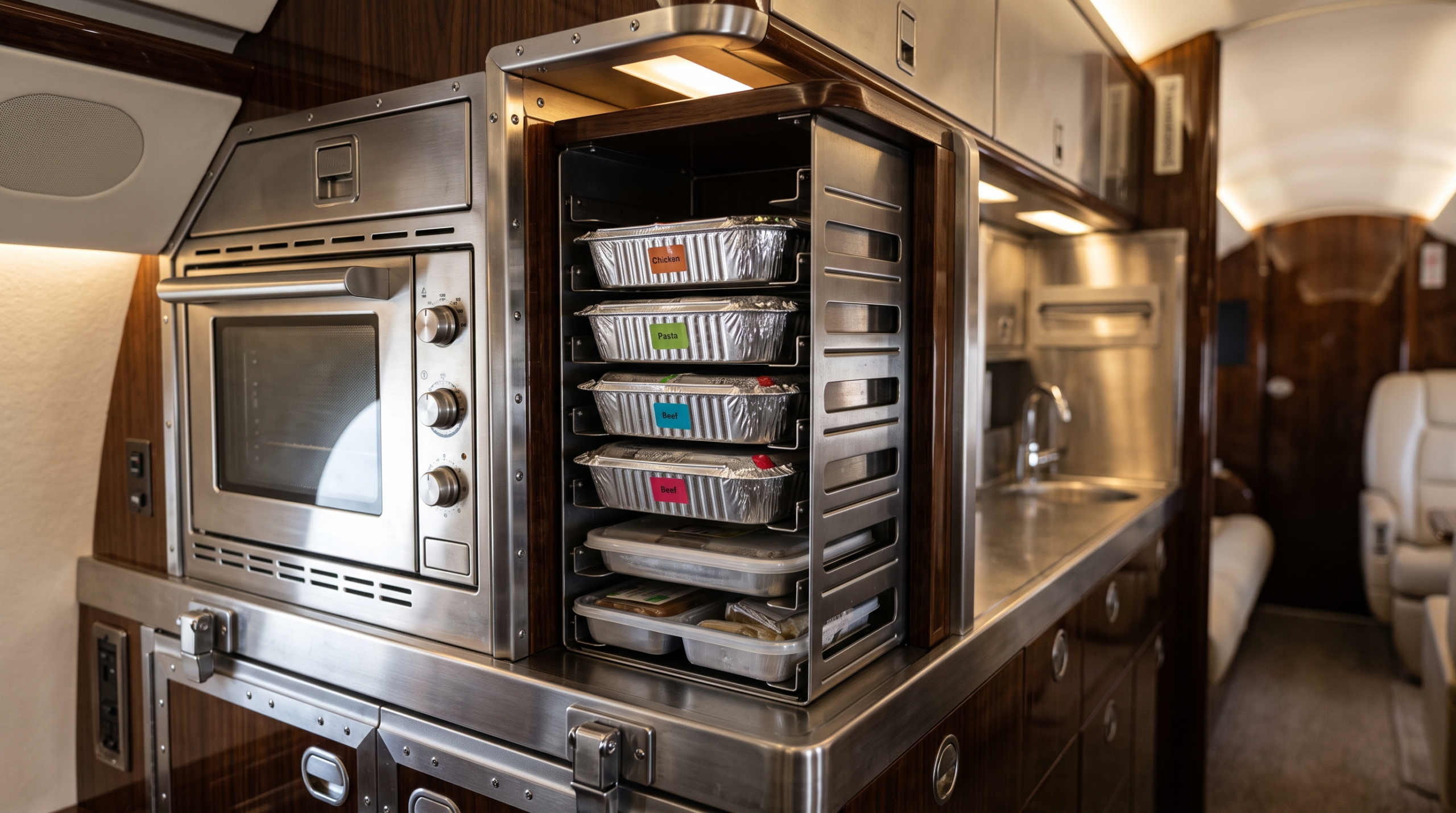
Three things shape what works. Cabin altitude and very low humidity suppress perception of sweet and salt while leaving acid, bitterness and umami largely intact — so flat-tasting food gets flatter. Hold time between kitchen and consumption is measured in hours, not minutes. And the galley may or may not be able to reheat anything, depending on the aircraft, as covered in our guide to matching menus to aircraft galleys.
Lowcountry cooking is, as it happens, unusually well suited to two of those three. It is a cuisine built on acid, smoke, pickling and preservation — techniques that were developed for a hot climate without refrigeration and that translate remarkably well to a cabin.
What travels beautifully
Pickled and preserved vegetables. Chow-chow, pickled okra, pickled shrimp, green tomato relish. Acid-forward, shelf-stable through a long hold, and they read as vividly at altitude as on the ground. Pickled shrimp in particular is close to a perfect inflight item — it is designed to be eaten cold, it improves for several hours, and it is unmistakably Charleston.
Benne seeds. The Lowcountry’s heirloom sesame turns up in wafers, brittles, and as a crust or garnish. Nutty, toasty, textural, and completely stable. Benne wafers alongside a cheese selection are a quiet, genuinely regional upgrade over a generic cracker.
Smoked and cured proteins. Smoked local fish, country ham, and cured pork are built for hold time and carry enough smoke and salt to stay legible at altitude. Country ham with pimento cheese and benne wafers is a Lowcountry board that needs no galley at all.
Pimento cheese. Holds perfectly, needs no equipment, and is regionally specific in a way passengers notice.
Carolina Gold rice, served cold. The heirloom rice that built the Lowcountry economy makes excellent cold rice salads — with herbs, benne, and a sharp vinaigrette. Better cold than most rice, and it holds structure well.
South Carolina peaches, in season. Through summer and early autumn these are genuinely exceptional and need nothing done to them. Grilled peach with country ham is a two-ingredient regional plate that survives anything.
Boiled peanuts. Idiosyncratic, deeply local, and a reliable conversation piece in a snack service.
What needs rework to travel
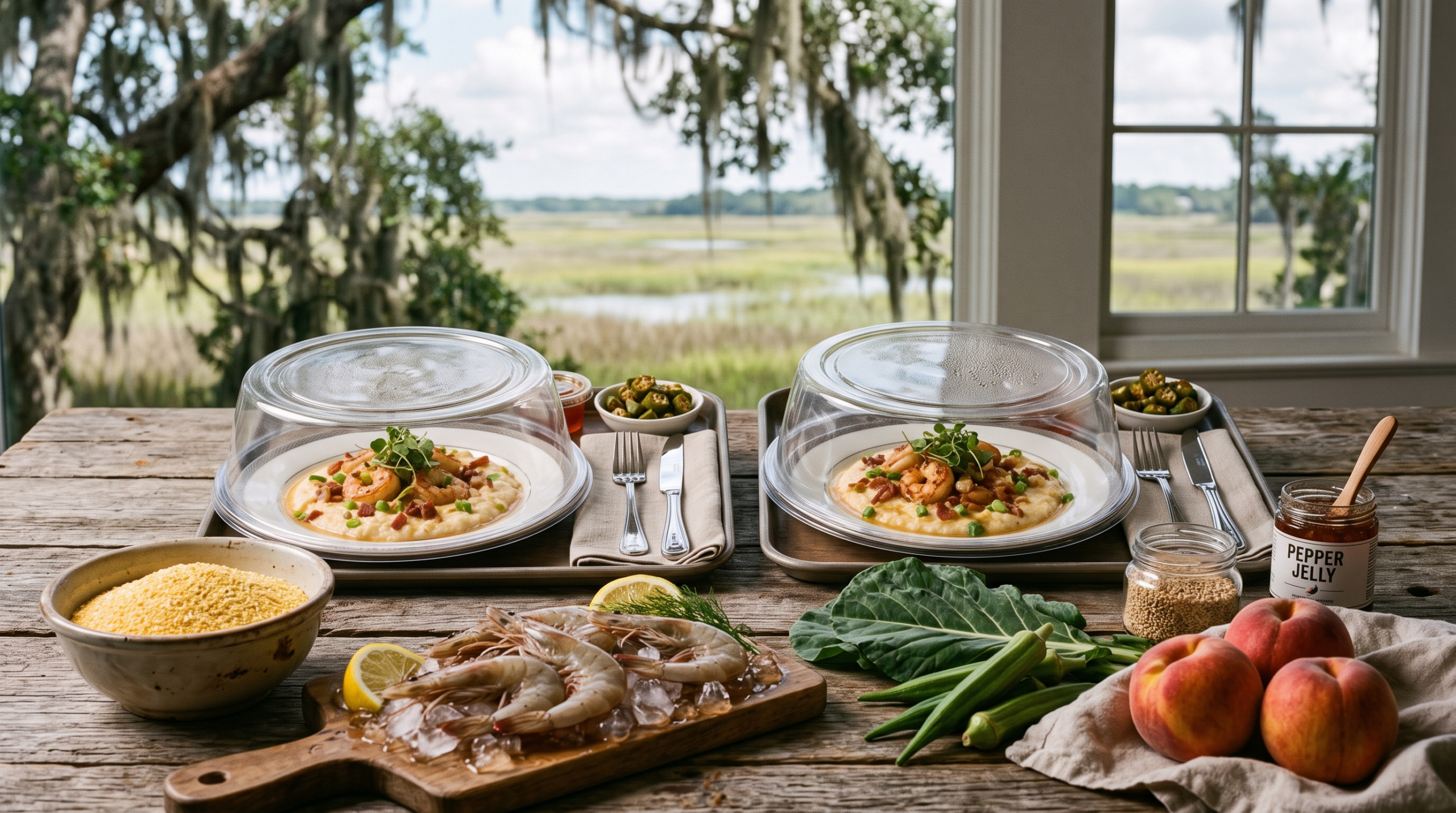
Shrimp and grits. The signature dish, and the one that most often disappoints in a cabin. Grits set and stiffen as they cool and go grainy on reheat; shrimp overcook on a second heating. It can be done — stone-ground grits held loose with extra stock and cream, shrimp deliberately undercooked and finished by residual heat, gravy packed separately — but it requires a galley with a real oven and someone to assemble. On a light-cabin aircraft, a cold Carolina Gold rice salad with pickled shrimp delivers the same regional signal and actually arrives well.
She-crab soup. Cream-based and prone to splitting on reheat. Achievable in a proper galley if the base is stabilized and the sherry goes in at service, but it is a heavy-cabin item.
Fried seafood. Charleston fries beautifully and none of it survives twenty minutes in a sealed container, let alone three hours. If a passenger specifically requests it, it goes in a vented container and gets eaten early. Otherwise, a chilled shrimp cocktail or a seared fish is the better answer — the same logic behind the formats in our crudité platter and FBO cheese board pieces.
Okra. Superb pickled or roasted hard. Stewed okra does not hold.
Biscuits. Wonderful for about forty minutes. On an early departure with a short delivery-to-service window they are worth it; beyond that, benne wafers or a good cornbread hold far better.
A Charleston departure menu that actually works
A Lowcountry service built for a midsize cabin with a modest galley might run: a cold opening of pickled shrimp with Carolina Gold rice salad and pickled okra; a board of country ham, pimento cheese, local cheeses, benne wafers and chow-chow; a main of slow-roasted pork shoulder with mustard barbecue sauce and braised greens, supplied oven-ready; and a close of peach and benne brittle with local honey. Every element is regionally specific, every element holds for hours, and only one element needs the oven.
On a light-cabin aircraft, drop the roasted main and the service is still complete, still Charleston, and still excellent.
Seasonality matters more here than most places
Lowcountry cooking is genuinely seasonal. Peaches run May through August. Local shrimp season runs roughly May into December. Tomatoes peak in early summer, greens and root vegetables through autumn and winter, oysters in the cold months. A menu that ignores this ends up sourcing from the same national supply chain as everyone else, which defeats the entire purpose.
This is also the practical argument for a Charleston-based kitchen over a provider routing in from elsewhere — access to local product on the day, at the right point in its season. Our Charleston KCHS guide covers the operational side of local sourcing.
Put the Lowcountry on your next departure
If you are flying out of Charleston and your catering could have come from any city in America, you are leaving the best part of the trip on the ground.
Request a Lowcountry Inflight Menu — tell us your aircraft, passenger count and departure date, and we will build a seasonal Charleston service your galley can actually deliver.
More on our Charleston kitchen on our Charleston catering page, our Charleston catering menu, and our inflight catering services overview. Background on Lowcountry heirloom ingredients including Carolina Gold rice and benne is published by the Carolina Gold Rice Foundation.