Sports Team Catering for Charter Flights: A Coordinator’s Playbook for Team Meals at 30,000 Feet
Sports team catering nationwide is a different operational discipline from a typical inflight charter. A 60-passenger NFL travel roster, a 25-player college basketball squad on a tournament leg, or a 30-person professional racing crew flying between weekend events all share the same problem: the meal has to land at the right FBO, fit the team’s nutrition program, accommodate a dozen-plus dietary requirements, and be ready when the bus rolls up — not 20 minutes later.
This guide walks athletic department travel coordinators, team operations managers, and charter dispatchers through what a nationwide inflight catering coordinator actually does for sports team travel, the questions to ask before contracting, and how Iacofano’s coordinates team meals across U.S. airports.
Why sports team catering doesn’t look like other inflight catering
Two factors set team catering apart from corporate or VIP charter catering.
Volume + nutritional precision. A 60-person travel roster isn’t 60 of the same plate. A modern team nutrition program might call for 18 high-protein recovery meals for athletes coming off competition, 12 standard performance meals for the next-day starters, and 30 mixed meals for coaches, training staff, scouts, and front-office travelers. Vegan, halal, kosher, gluten-free, lactose-intolerant, and food-allergy plates layer on top.
Schedule integration with team operations. The meal time has to align with the post-game recovery window, the pre-game fuel window, or the in-flight rest plan — not just the takeoff time. Team performance staff care more about timing than presentation.
The four meal types a team coordinator usually sources
1. Post-game recovery meals
High-protein, anti-inflammatory, hydration-focused. Often the priority meal of the trip because athletes board immediately after competition. Standard menu: lean grilled protein, complex carbohydrates (sweet potato, jasmine rice, quinoa), steamed vegetables, fruit, recovery beverages. Light desserts only — the goal is recovery, not indulgence.
2. Pre-competition fuel meals
The opposite profile: digestible carbohydrates, moderate protein, low fat, low fiber. Avoid heavy sauces or high-fiber proteins that complicate competition. Team performance staff usually specify the macronutrient targets; the kitchen executes against them.
3. Coach and staff meals
Less performance-driven, more variety-driven. Coaches, scouts, and front-office travelers usually want the same composed-meal options a corporate charter would get. Standard hot meals, salads, sandwich options.
4. Snack and hydration setup
Always present on team flights. Fresh fruit, nuts, recovery bars, electrolyte drinks, sports hydration, and water. Stocked to weather a delay or a long leg.
The five questions to ask before contracting team catering
If you’re sourcing a nationwide partner for the season, these questions surface the operators who can deliver consistently from the ones who can’t.
Can you deliver to every FBO on our schedule?
A team that flies a 14-game road slate may touch 14 FBOs. Confirm your provider’s coverage map matches your schedule — and that the menu, packaging, and service standards stay consistent across all of them.
How do you handle athlete dietary requirements?
Modern team nutrition programs often include detailed individual restrictions and preferences. The provider should be able to tag meals by player number or position, accept restriction updates 24 hours before departure, and not lose the data between trips.
What’s your post-game meal lead time?
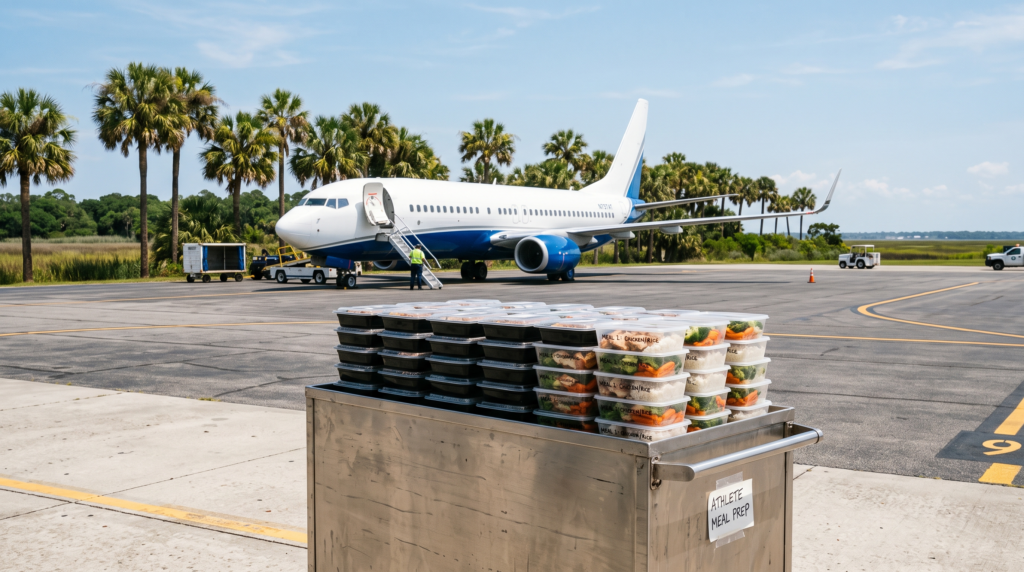
Post-game timing is the toughest case. Your provider should be willing to commit to a delivery window — typically 30 minutes after the gate close estimate — and to a packaging spec that keeps food at the right temperature for the actual gate-to-wheels-up window.
How do you package for galley constraints?
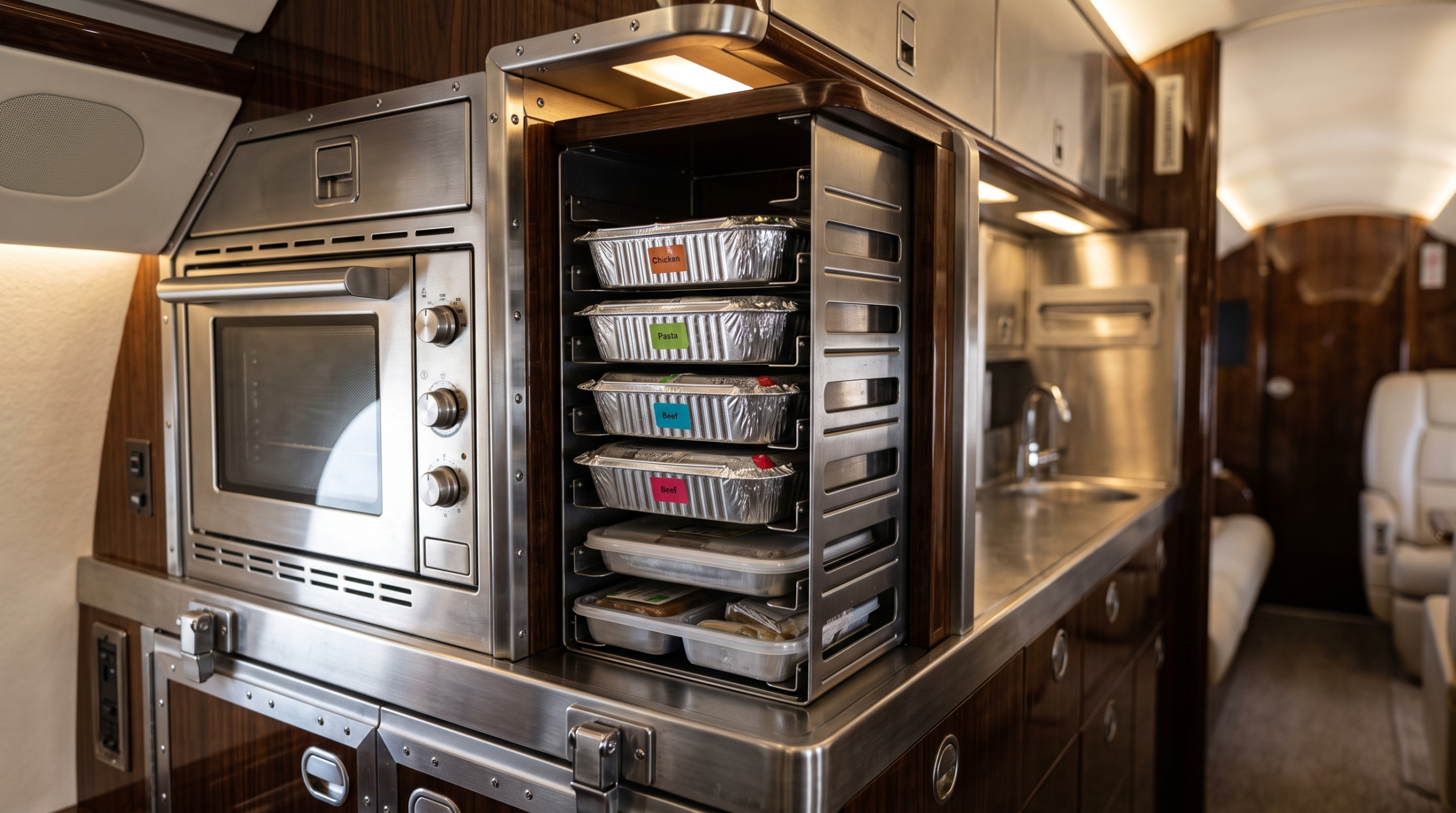
Charter aircraft used for team travel range from heavy-iron jets to repurposed commercial 737s. Packaging that works for a Gulfstream G650 galley fails on a 737. The provider should ask about the aircraft type for every trip.
What’s your operations contact for game-day changes?
Roster changes, dietary updates, departure delays — they happen on every trip. There should be a named operations contact with phone access during the entire travel window, not a generic inbox.
How nationwide coordination changes the team catering equation
Single-city catering providers can be a fit if your team flies a regional schedule. For programs with national footprints — pro sports leagues, top NCAA conferences, motorsports teams that travel weekly — the operations problem isn’t menu, it’s consistency.
Iacofano’s coordinates team catering through a vetted partner kitchen network from our Charleston, SC operations base. The roster, menu spec, dietary tagging, and timing requirements travel with the trip — so a recovery meal delivered to the Charleston Executive (KCHS) FBO on a Wednesday looks and performs identically to the one delivered at Centennial Airport (KAPA) on Saturday. That consistency is what travel coordinators actually need at the season level.
Frequently asked questions about sports team catering for charter flights
How far in advance should we book team catering for a road trip?
Standard lead time is 48–72 hours for a domestic charter; longer for international or for trips with complex dietary requirements. For recurring weekly schedules, we recommend a season-long contract with weekly trip-specific briefs — it removes negotiation overhead and locks in your nutrition program with the kitchen.
Can a single catering provider handle our whole road schedule?
Yes — if the provider has a nationwide coordination model. Iacofano’s coordinates across U.S. airports through vetted partner kitchens, so one contract covers your entire schedule. A provider that can only deliver in one city will not work for a multi-city schedule unless you’re willing to manage relationships with multiple regional caterers.
How do you handle dietary restrictions for 60+ players and staff?
We work from a roster that flags each traveler’s restrictions and preferences. Meals are tagged by seat or roster number and delivered in labeled containers. Updates within 24 hours of departure are normal and we expect them. The dietary tagging system should be sophisticated enough that “Athlete #14, halal, no nuts” is a single line in the brief — not a phone call from your team nutritionist trying to reach a chef.
What does sports team catering typically cost?
Per-passenger cost varies by service tier (see our guide on how much private jet catering costs). For team travel, standard hot meals tend to land in the $85–$175 band per passenger, with dietary-specialty meals at the higher end. Volume on a 60-passenger flight can produce favorable per-tray pricing on standard meals; specialty meals stay closer to retail because of separate prep.
How do you coordinate post-game meal delivery when the game runs long?
Delays are normal. Our operations team monitors the game in real time when the meal delivery is scheduled within 30 minutes of expected wheels-up. We can hold the food at temperature, push back the delivery window, or split the order between hot and cold components — whatever the actual gate-close time requires.
Plan your team’s charter catering season
If you’re sourcing a nationwide team catering partner for next season — or evaluating whether your current setup can scale — start with a 30-minute call.
Request an Inflight Quote for sports team catering. Walk us through your travel schedule, roster size, dietary mix, and nutrition program. We’ll come back with a coverage map and a season-level proposal.
For more on how our nationwide coordination works, our pieces on inflight catering services and operational excellence at 30,000 feet walk through the operations side. The National Air Transportation Association (NATA) publishes useful operator best practices for charter operations broadly.