Private Jet Catering in Charleston (KCHS): An FBO-by-FBO Guide for Schedulers
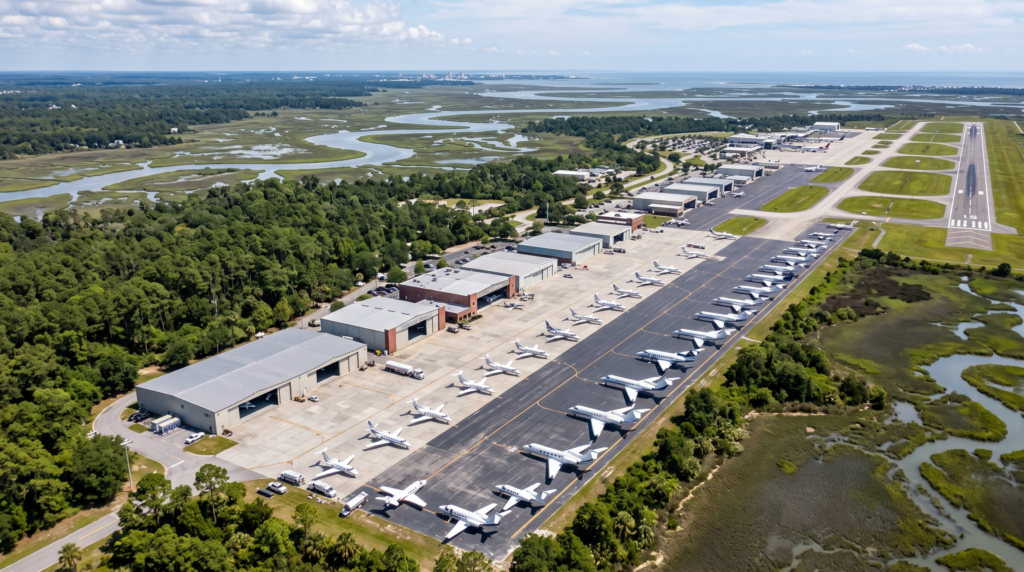
Charleston has become one of the busiest business aviation destinations on the South Atlantic coast, and Charleston International Airport (KCHS) is where most of that traffic lands. Between corporate travel to the Boeing and Mercedes-Benz Vans operations, a wedding and golf season that runs most of the year, and a tourism calendar that fills every hotel in the Lowcountry, KCHS sees a volume of transient business aircraft that surprises people who think of Charleston as a small market.
If you are a scheduler or dispatcher sourcing inflight catering into Charleston for the first time, this guide covers what you need to know about the field, how catering delivery works at a shared-ramp airport, and the local factors that affect your timing.
What KCHS actually is
Charleston International Airport is a joint civil-military field, sharing runways with Joint Base Charleston. That matters operationally: military activity can affect ground movement and ramp access in ways that a purely civil field does not. General aviation traffic works through the field’s fixed-base operators, and catering delivery is coordinated through the FBO handling your aircraft.
Charleston Executive Airport (KJZI) on Johns Island is the area’s secondary general aviation field. It is quieter, closer to Kiawah and Seabrook, and frequently the better choice for aircraft that fit it — particularly during peak season when KCHS ramp space tightens. Catering delivery to KJZI is straightforward but adds drive time from most Charleston kitchens, which is a lead-time consideration rather than a limitation.
How catering delivery works at a shared-ramp field
At a field like KCHS, your catering provider does not drive up to your aircraft unescorted. The delivery flows through the FBO. In practice that means:
The FBO is the handoff point. Catering is delivered to the FBO, received by line staff or the concierge desk, and moved to the aircraft. Your catering provider needs to know which FBO is handling your tail, not just that you are landing at KCHS.
Delivery windows back off wheels-up, not off your convenience. A typical target is delivery ninety minutes to two hours before departure — enough time for the FBO to receive it, log it, and get it aboard, with margin for a ramp that is busier than expected.
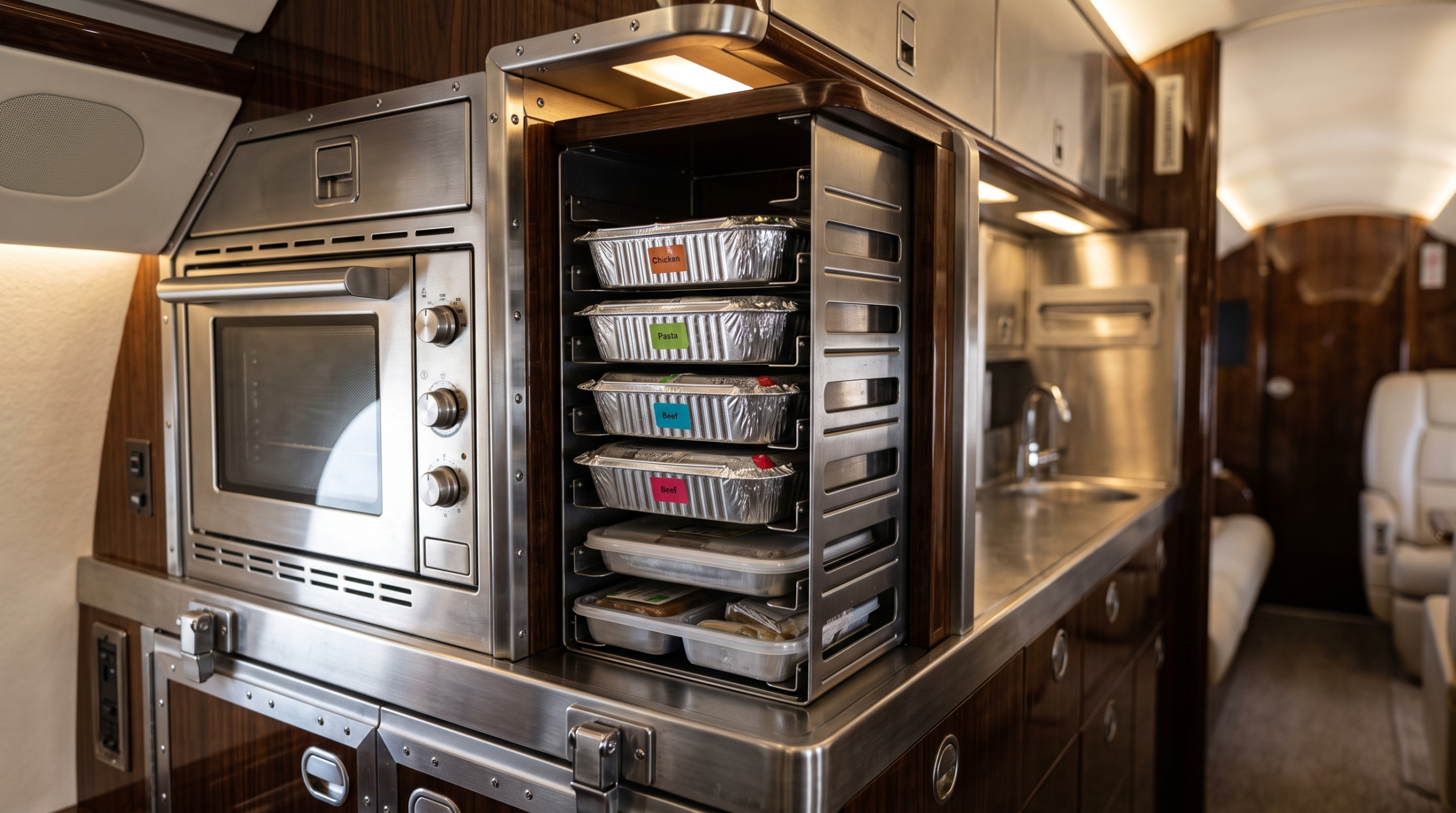
Cold chain has to hold through the handoff. Charleston summers regularly sit in the mid-90s with humidity to match. Catering that is going to sit on a hot ramp needs packaging built for it. This is not a theoretical concern here — it is the single biggest local variable, and it is why packaging for in-flight catering matters more in the Lowcountry than in a temperate market.
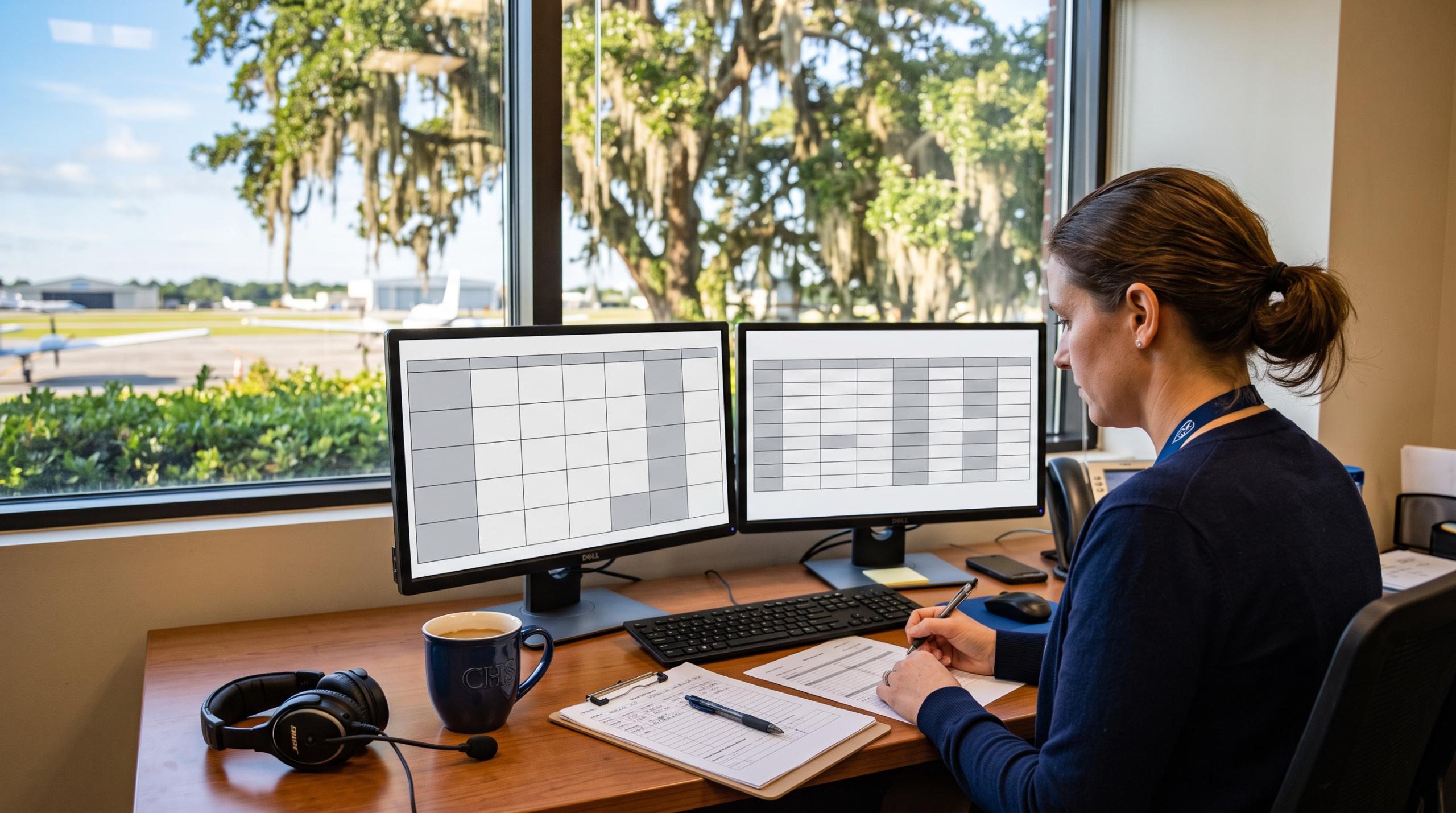
Tail number drives everything. The FBO reconciles the delivery against a tail number and a departure time. Ordering against a passenger name or a company name creates exactly the ambiguity that loses a delivery. Our piece on tail-number coordination walks through why.
What to give your catering provider for a Charleston order
A complete KCHS catering order includes the tail number, the handling FBO, the departure date and local time, passenger and crew counts split out, the aircraft type or galley spec, dietary requirements and allergies, the service tier you want, and a mobile contact reachable on the day of the flight. Missing the FBO is the most common omission and the one most likely to cause a problem.
Local factors that affect your Charleston catering timing
Seasonality is severe. Charleston’s peak runs March through June and September through November, driven by weddings, golf, and the tourism calendar. During peak weeks, kitchen capacity across the city tightens — not just aviation catering, but every kitchen. Ordering three to five days out during peak season is meaningfully different from ordering three days out in January.
Event weeks compress everything. Major Charleston events pull kitchen and delivery capacity across the whole market. If your trip lands during a large convention or festival week, treat your catering lead time as if you were ordering short-notice.
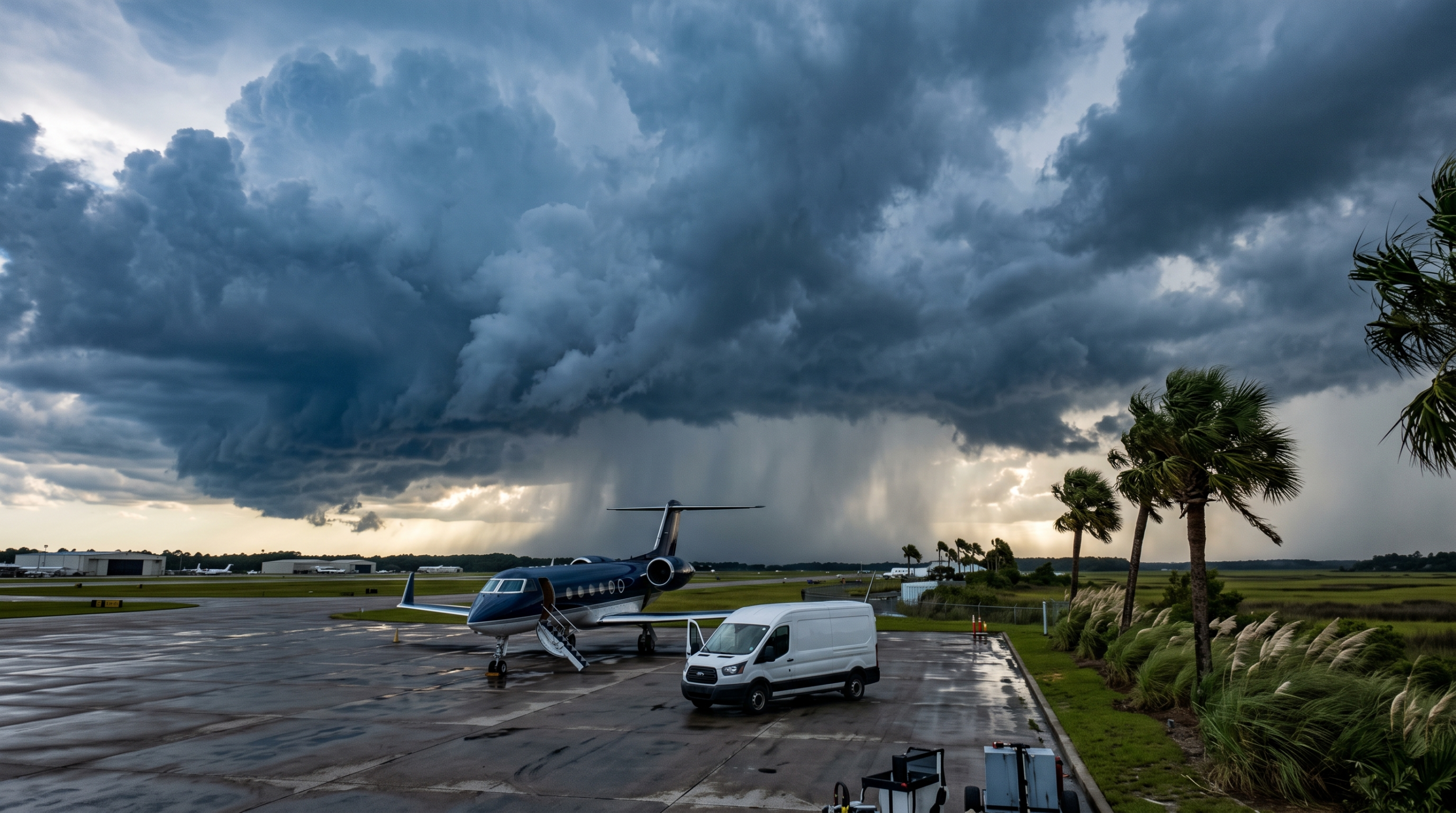
Hurricane season is a real planning input. The Atlantic season runs June through November, with the Charleston peak in late August and September. Weather here does not just delay flights, it reroutes them — which changes where your catering needs to be. We cover this in depth in our guide to hurricane season flight catering.
Bridge and traffic timing. Charleston’s road network funnels across a small number of bridges. A delivery routed during afternoon peak can lose twenty minutes that did not exist in the plan. Local kitchens build this in; kitchens routing in from outside the market often do not.
Tidal flooding. Charleston experiences recurrent tidal flooding on king tides, independent of any storm. Certain downtown and peninsula routes become slow or impassable. It is predictable and it is on the calendar, but only if someone is watching it.
Why a Charleston-based kitchen changes the math
The practical difference between a locally-based kitchen and a provider routing in from another market comes down to three things: drive time to the FBO, ability to absorb a schedule change, and access to local product.
A kitchen inside the Charleston market can reach the KCHS general aviation ramp in well under half an hour in normal conditions. That distance is what makes short-notice orders and same-day schedule changes executable rather than aspirational. It is also what makes genuinely local sourcing possible — Lowcountry seafood, South Carolina produce, and regional specialties that a distant kitchen simply cannot put on your aircraft fresh. Our piece on Lowcountry ingredients that travel well covers what actually works at altitude.
Common Charleston catering requests
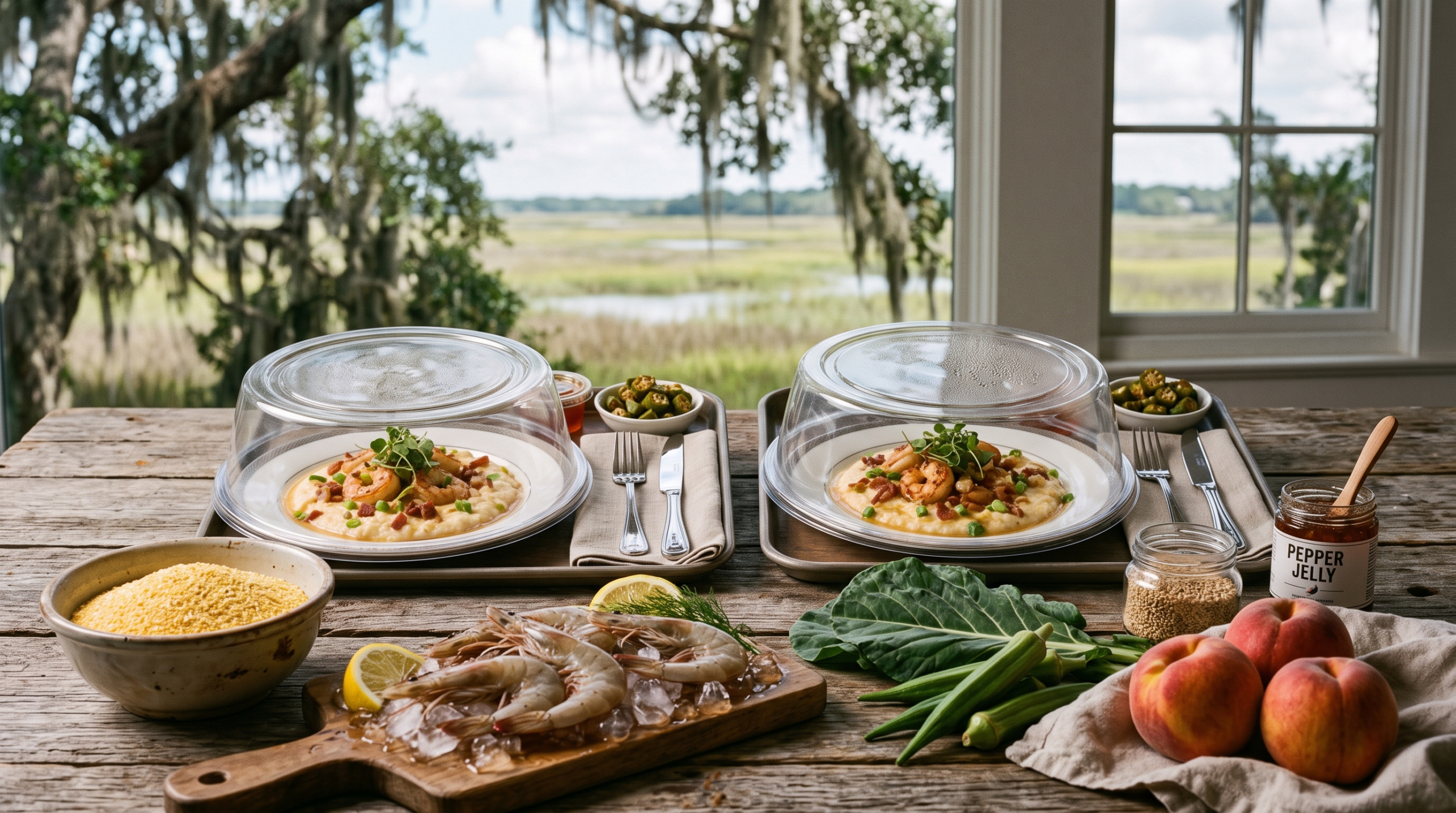
Trips out of Charleston skew toward a few recognizable patterns. Departures after a wedding weekend want lighter, restorative food. Golf-trip departures from Kiawah and Seabrook want substantial breakfast and hand-held lunch formats. Corporate trips tied to the manufacturing corridor want efficient, professional service with reliable timing above all else. And a meaningful share of Charleston departures want the region on the plate — shrimp, grits, benne, peaches — as the last impression of the trip. Our FBO cheese board and crudité platter pieces cover the formats that hold up best on the ramp.
Ordering catering into Charleston
Whether you are a one-time transient or building a recurring Charleston rotation into your schedule, the setup is the same: get an operator profile on file with your fleet, your usual FBOs, and your standing preferences, so the next order is a single line.
Request a Charleston Inflight Quote — send us tail number, FBO, date and passenger count, and we will come back with an itemized quote and a confirmed delivery window.
More on our Charleston operation on our Charleston catering page and our locations page. Airport and operator information for KCHS is published by Charleston International Airport, and general business aviation operating guidance is available from NBAA.